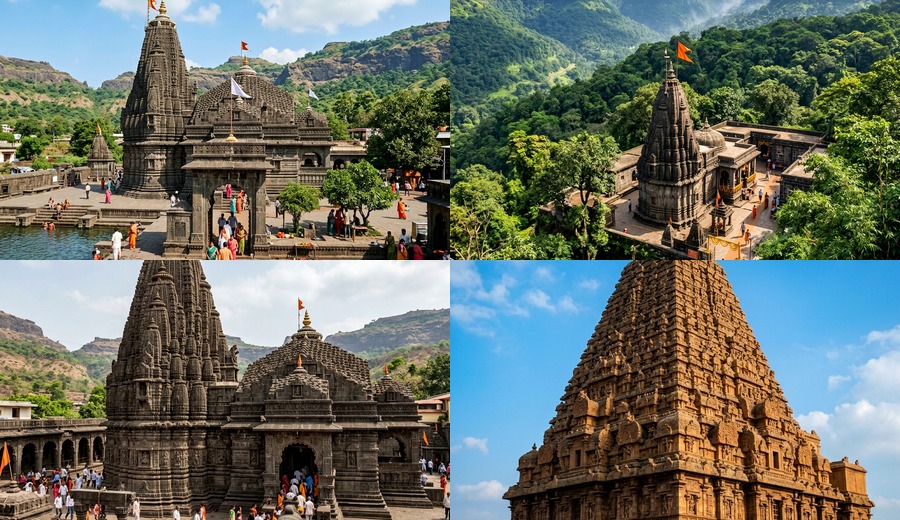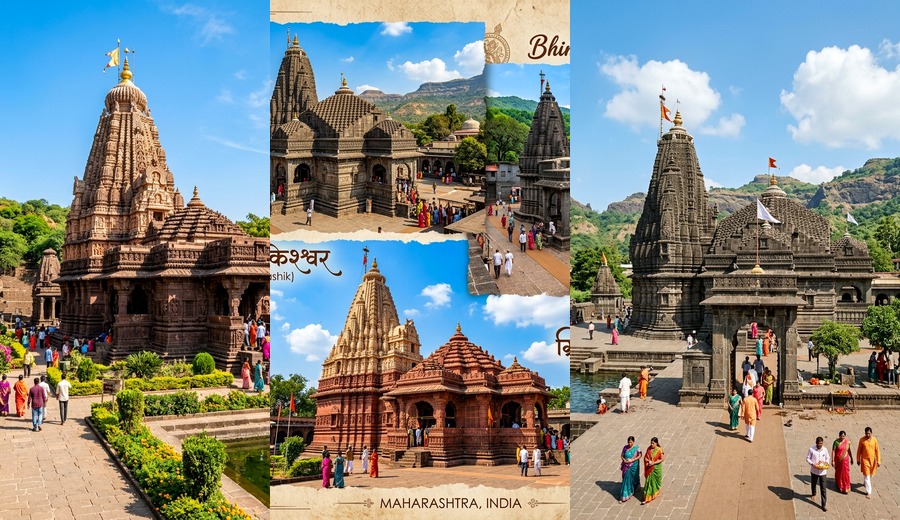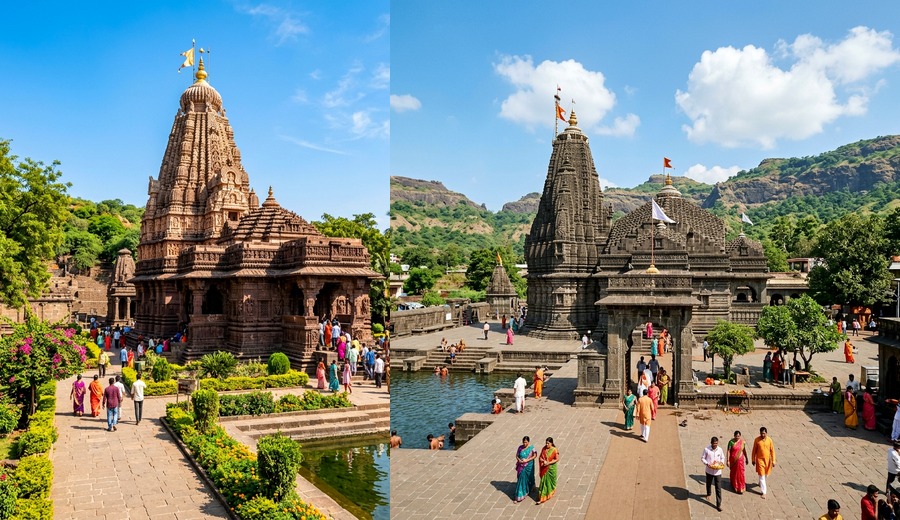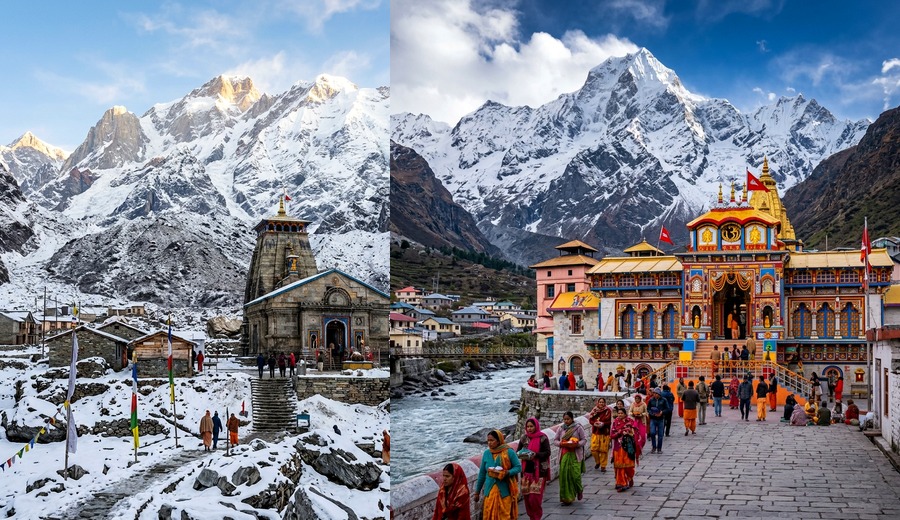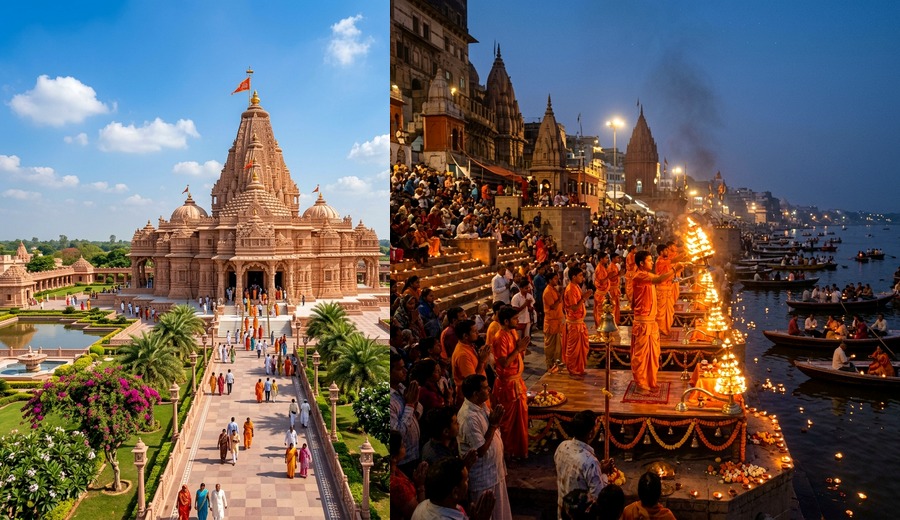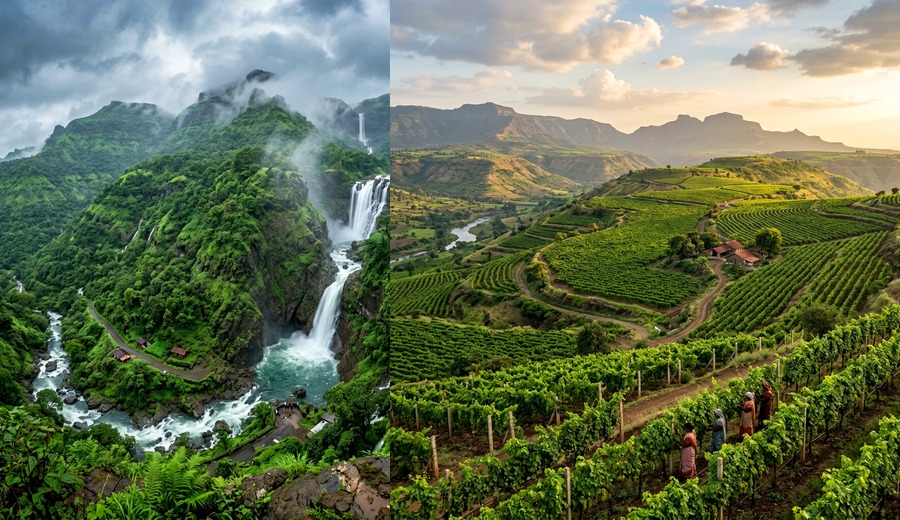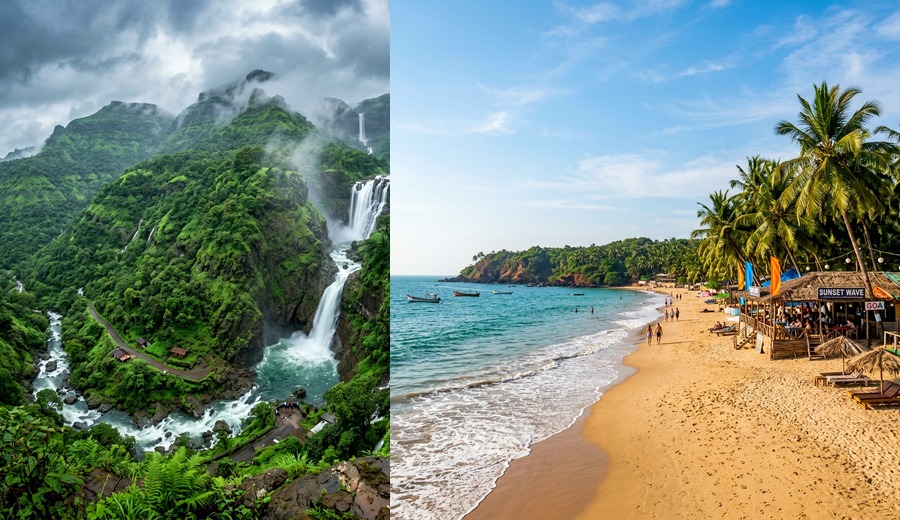

7 jyotirlinga Darshan
7 JYOTIRILINGA DARSHAN
7 jyotirlinga Darshan[/caption]
There are 12 Jyotirlinga in India. It is believed that Lord Shiva first manifested himself on Earth on the night of the Aridra Nakshatra, thus the special reverence for the Jyotirlinga. There is no unique appearance to mark the Jyotirlingas. Many people believe that you can see these lingas as columns of fire piercing through the earth after you reach a high level of spiritual attainment. Originally there were 64 Jyotirlingas out of which 12 are considered to be highly auspicious and holy. The 12 Jyotirlinga temples in India take the name of the presiding deity. Each considered a different manifestation of Lord Shiva. The primary image of all these lingas is the “lingam” representing the beginning and end stambh pillar or the infinite nature of Lord Shiva.
12 Jyotirlingas in India with Their Location:
Somnath Jyotirlinga in Gir,Gujarat
MallikarjunaJyotirlingainSrisailam,AndhraPradesh
MahakaleshwarJyotirlingainUjjain,Madhya Pradesh
OmkareshwarJyotirlingainKhandwa,Madhya Pradesh
VaijynathJyotirlingainParliMaharashtra.
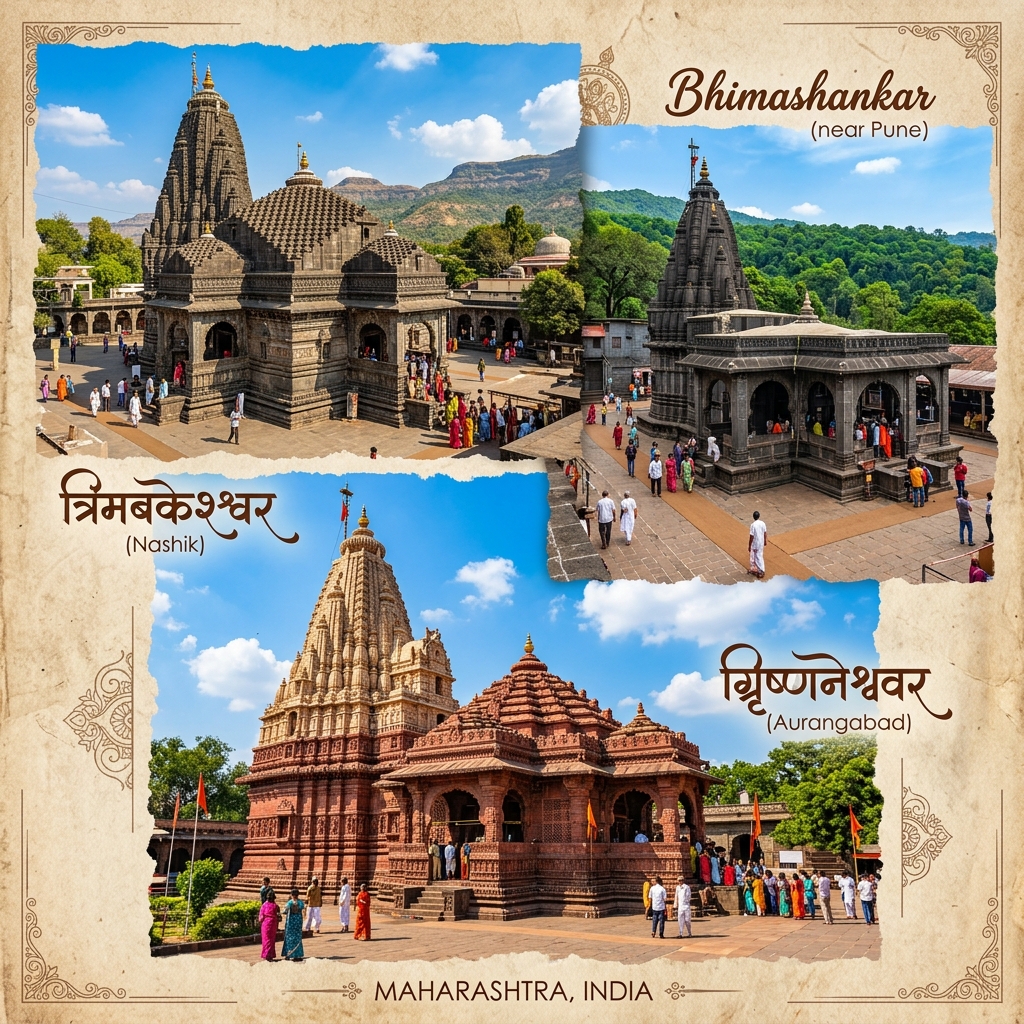
BhimashankarJyotirlingainMaharashtra
Ramanathaswamy Jyotirlinga in Rameshwaram, Tamil Nadu
AundhNagnathJyotirlingainMaharashtra.
KashiVishwanathJyotirlingainVaranasi,UttarPradesh
TrimbakeshwarJyotirlingainNasik,Maharashtra
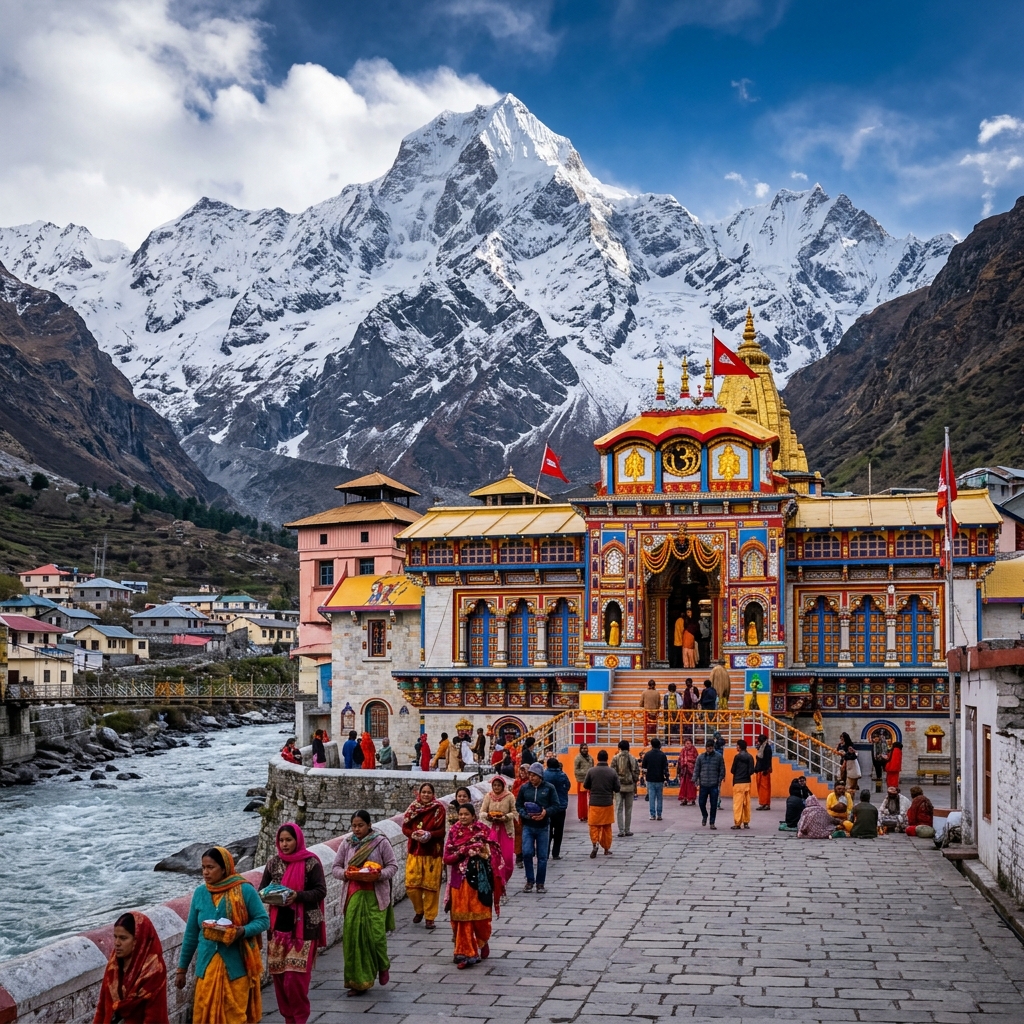
KedarnathJyotirlingainRudraprayag,Uttarakhand
GhrishneshwarJyotirlingain Aurangabad,Maharashtra
SHALINI CABS 7 JYOTIRLINGA DARSHAN
Five Jyotirlinga are in Maharashtra Two Jyotirlinga in Madhya Pradesh
Total Km 2200 6 Days Tour Package
5Night 6 Days
Trimbakeshwar Jyotirlinga
Omkareshwar Jyotirlinga (Night Halt)
Mahakaleshwar Jyoyirlinga(Night Halt)
Grishneshwar Jyotirlinga (Night Halt)
Aundh Nagnath
Parli Vaijnath (Night Halt)
BhimaShankar Jyotirlinga (Night halt)
ToSeeVideoclicktheLinkBelowvideo5JYOTRILINGINMAHARASHTRA
ToSeeVideoclicktheLinkBelowvideoOmkareshwarJyotirlinga


Sri Sai Baba, one of the foremost saints of modern India, the last avatar (incarnation) of Lord Dattatreya in this age of Kaliyuga.
Sai Baba arrived at the village of Shirdi in the Ahmednagar District of Maharashtra, at about 16 years old. He was revered by both his Muslim and Hindu devotees, and during, as well as after, his life on earth it remained uncertain if he was a Muslim or Hindu himself. Sai Baba stressed the importance of surrender to the guidance of the true Sadguru.
The Ahimsa aspect of Jainism, the renunciation aspect of Buddhism, the Dharmic aspect of Lord Rama the Nishkama-Karma aspect of Lord Krishna, the universal-love aspect of Jesus, the universal brotherhood aspect of Islam-all are found harmoniously blended in Sai Nath’s way of life. He also gave Darshan (vision) to people in the form of Rama, Krishna, Vithoba and many other gods depending on the faith of devotees.The presence of Dhuni (sacred fire) was a temple to the Hindus and the Parsees, the nimbaru (niche) on the western wall made it look like a mosque and to the Christian it was a church where the bells announce prayers. Shri Shirdi Sai Baba attained his “Mahasamadhi” on the auspicious “Vijayadasami” day in 1918.
When Sai Baba came to Shirdi, he used to spend most of his time under a neem tree which is now known as Gurusthan. According to a legend, when some villagers started to dig the land near the tree, Sai Baba asked them to stop as he said it was the resting place of the ancestors. If you ever travel to Shirdi and get a chance to taste a neem leaf fallen from the tree then you will be surprised by its taste. Interestingly, the neem leaves here don’t taste bitter but sweet. It is believed that those who get a chance to have a neem leaf from the tree have a healthy life and suffer from no diseases.

History and greatness of the temple of Shri Saibaba Temple
Sai Baba of Shirdi, also known as Shirdi Sai Baba, was an Indian spiritual master who is regarded by his devotees as a saint and a fakir. He is revered by both his Hindu and Muslim devotees during, as well as after his lifetime.
Sai Baba is now revered as an incarnation of Sri Dattatreya and considered as Saguna Brahma by his devotees. He is attributed to be the creator, sustainer, and destroyer of this universe by his devotees. He is decorated with jewels and all forms of Hindu Vedic deities as he is believed by his followers to be the supreme God.
According to accounts from his life, he preached the importance of realization of the self and criticized love towards perishable things. His teachings concentrate on a moral code of love, forgiveness, helping others, charity, contentment, inner peace, and devotion to God and guru. He stressed the importance of surrender to the true Satguru, who, having trod the path to divine consciousness, will lead the disciple through the jungle of spiritual training
Sai Baba also condemned distinction based on religion or caste. It remains unclear if he was a Muslim or a Hindu. This, however, was of no consequence to Sai Baba. His teachings combined elements of Hinduism and Islam: he gave the Hindu name Dwarakamayi to the mosque in which he lived, practiced both Hindu and Muslim rituals, taught using words and figures that drew from both traditions, and took samadhi in Shirdi. One of his well-known epigrams, Allah Malik (God is King) and Sabka Malik Ek (Everyone’s Master is One), is associated with both Hinduism and Islam. He is also known to have said Look to me, and I shall look to you[4] and Allah tera bhala Karega.
Background
Sai Baba’s date of birth including his birthplace remains unknown and is debatable due to lack of evidence and no definitive information exists to prove it. Most definitive information about Shirdi Sai Baba tends to be derived from a book called Shri Sai Satcharitra written by a disciple called Hemadpant (also known as Annasaheb Dabholkar / Govind Raghunath) in 1922 in Marathi.[8] The book itself is a compilation based on accounts by his various disciples and Hemadpant’s personal observations observing Sai Baba from 1910 onwards.
Sai Baba’s real name remains unknown. The name Sai was given to him by Mhalsapati when he arrived at Shirdi, a town now in the west Indian state of Maharashtra. The word Sai refers to a religious mendicant but can also mean God. In several Indian and Middle Eastern languages, the term Baba is an honorific signifying grandfather, father, old man, or sir. Thus Sai Baba denotes holy father, saintly father, or (venerable) poor old man.
Some of Sai Baba’s disciples became famous as spiritual figures and saints, such as Mahalsapati, a priest of the Khandoba temple in Shirdi, and Upasni Maharaj. He was revered by other saints as well, such as Saint Bidkar Maharaj, Saint Gagangiri Maharaj, Saint Janakidas Maharaj, and Sati Godavari Mataji. Sai Baba referred to several saints as ‘my brothers’, especially the disciples of Swami Samartha of Akkalkot.
Early years
Sai Baba (right) and some of his devotees at Dwarakamai, his own temple.
Sai Baba with some devotees
Although Sai Baba’s origins are unknown, some indications exist that suggest that he was born not far from Shirdi. Historical researches into genealogies in Shirdi give support to the theory that Baba could have been born with the name Haribhau Bhusari. Baba was notorious for giving vague, misleading, and contradictory replies to questions concerning his parentage and origins, brusquely stating the information was unimportant. He had reportedly stated to a close follower, Mahalsapati, that he has been born of Deshastha Brahmin parents in the village of Pathri and had been entrusted into the care of a fakir in his infancy. On another occasion, Baba reportedly said that the fakir’s wife had left him in the care of a Hindu guru, Venkusa of Selu and that he had stayed with Venkusa for 12 years as his disciple. This dichotomy has given rise to two major theories regarding Baba’s background, with the majority of writers supporting the Hindu background over the Islamic, while others combine both the theories (that Sai Baba was first brought up by a fakir and then by a guru).
Baba reportedly arrived at the village of Shirdi in the Ahmednagar District of Maharashtra, India, when he was about sixteen years old. Although there is no agreement among biographers about the date of this event, it is generally accepted that Baba stayed in Shirdi for three years, disappeared for a year, and returned permanently around 1858, just after the Indian Rebellion of 1857. This posits a possible birth year of 1838. He led an ascetic life, sitting motionless under a neem tree and meditating while sitting in an asana. The Sai Satcharita recounts the reaction of the villagers
The people of the village were wonder-struck to see such a young lad practicing hard penance, not minding heat or cold. By day he associated with no one, by night he was afraid of nobody.
His presence attracted the curiosity of the villagers and the religiously-inclined such as Mhalsapati, Appa Jogle, and Kashinatha regularly visited him, while others such as the village children considered him mad and threw stones at him. After some time he left the village and it is unknown where he stayed at that time or what happened to him. However, there are some indications that he met with many saints and fakirs and worked as a weaver; he claimed to have fought with the army of Rani Lakshmibai of Jhansi during the Indian Rebellion of 1857.
Return to Shirdi
Sai Baba in his usual attire
Sai Baba returned to Shirdi in 1858. He appeared at the Khandoba Mandir in Shirdi. The temple priest, Mahalsapati, upon seeing him for the very first time, welcomed him by saying ‘Aao, Sai!’ (‘Come Sai’). From then on, He was known by the name (Sai Baba).
Around this time he adopted his famous style of dressing, consisting of a knee-length one-piece Kafni robe and a cloth cap. Ramgir Bua, a devotee, testified that Sai Baba was dressed like an athlete and sported ‘long hair flowing down to the end of his spine’ when he arrived in Shirdi and that he never had his head shaved. It was only after Baba forfeited a wrestling match with one Mohiddin Tamboli that he took up the kafni and cloth cap, articles of typical Sufi clothing. This attire contributed to Baba’s identification as a Muslim fakir and was a reason for initial indifference and hostility against him in a predominantly Hindu village.
For four to five years, Baba lived under a neem tree and often wandered for long periods in the jungle around Shirdi. His manner was said to be withdrawn and uncommunicative as he undertook long periods of meditation. He was eventually persuaded to take up residence in an old and dilapidated mosque and lived a solitary life there, surviving by begging for alms and receiving itinerant Hindu or Muslim visitors. In the mosque, he maintained a sacred fire which is referred to as a dhuni, from which he gave sacred ash (‘Udi’) to his guests before they left. The ash was believed to have healing and apotropaic powers. He performed the function of a local hakim and treated the sick by application of ashes. Sai Baba also delivered spiritual teachings to his visitors, recommending the reading of the Ramayan and Bhagavat Gita for Hindus and the Qur’an for Muslims. He insisted on the indispensability of the unbroken remembrance of God’s name (dhikr, and often cryptically expressed himself with the use of parables, symbols, and allegories).
Baba is believed to have grown and cultivated a garden called Lendi Baug, named after a river called Lendi which flowed nearby. The garden continues to be a place visited by pilgrims and has temples, samadhis of people, and animals associated with Shirdi Sai Baba’s life and temples.[26]
In 1910, Sai Baba’s fame began to spread in Mumbai. Numerous people started visiting him because they regarded him as a saint with the power of performing miracles or even as an avatar.[29] They built his first temple at Bhivpuri, Karjat.
Final years and death (Samadhi)
In August 1918, Shirdi Sai Baba told some of his devotees that he would soon be “leaving his mortal body” (dying). Towards the end of September, he had a high fever and stopped eating. As his condition deteriorated, he asked his disciples to recite holy texts to him and continued to meet visitors. On 15 October 1918, he breathed his last. The day coincided with the Hindu calendar date that year for Vijayadashami. His remains were interred at “Buti Wada” in Shirdi, after which it became a place of worship known today as Shree Samadhi Mandir or Shirdi Sai Baba Temple.
Teachings and practices
Shirdi Sai Baba, leaning against the wall of his masjid, with devotees
Sai Baba opposed all persecution based on religion or caste. He was an opponent of religious orthodoxy — Christian, Hindu, and Muslim.
Sai Baba encouraged his devotees to pray, chant God’s name, and read holy scriptures. He told Muslims to study the Qur’an and Hindus to study texts such as the Ramayana, Bhagavad Gita, and Yoga Vasistha.] He was impressed by the philosophy of the Bhagavad Gita and encouraged people to follow it in their own lives. He advised his devotees and followers to lead a moral life, help others, love every living being without any discrimination, and develop two important features of character: faith (Shraddha) and patience (Saburi). He criticized atheism.
In his teachings, Sai Baba emphasized the importance of performing one’s duties without attachment to earthly matters and of being content regardless of the situation. In his personal practice, Sai Baba observed worship procedures belonging to Islam; he shunned any kind of regular rituals but allowed the practice of Salah, chanting of Al-Fatiha, and Qur’an readings at Muslim festival times. Occasionally reciting the Al-Fatiha, Baba enjoyed listening to mawlid and qawwali accompanied with the tabla and sarangi twice daily.
Sai Baba interpreted the religious texts of both Islam and Hinduism. He explained the meaning of the Hindu scriptures in the spirit of Advaita Vedanta. His philosophy also had numerous elements of bhakti. The three main Hindu spiritual paths — Bhakti Yoga, Jnana Yoga, and Karma Yoga — influenced his teachings.
Sai Baba encouraged charity and stressed the importance of sharing. He said
Unless there is some relationship or connection, nobody goes anywhere. If any men or creatures come to you, do not discourteously drive them away, but receive them well and treat them with due respect. Sri Hari (God) will certainly be pleased if you give water to the thirsty, bread to the hungry, clothes to the naked, and your verandah to strangers for sitting and resting. If anybody wants any money from you and you are not inclined to give, do not give, but do not bark at him like a dog.”
Worship and devotees
Main article: Shirdi Sai Baba movement
Sai Baba’s Temple in Shirdi
The Mandir Kalasha Of The Samadhi Mandir, Shirdi
The Shirdi Sai Baba movement began in the 19th century, while he was living in Shirdi. A local Khandoba priest, Mhalsapati Nagre, is believed to have been his first devotee. In the 19th century, Sai Baba’s followers were only a small group of inhabitants of Shirdi and a few people from other parts of India.
Because of Sai Baba, Shirdi has become a place of importance and is counted among the major Hindu places of pilgrimage. The first Sai Baba temple is situated at Kudal, Sindhudurg. This temple was built in 1922. It is believed that Sai Baba gave one rupee to Dada Madye Ji with which he built the temple in Kudal.
Today, the Sai Baba Temple in Shirdi is visited by an average of 25,000 pilgrims a day and during religious festivals, this number can reach up to 100,000. The Sai Baba temple in Shirdi is managed by the Shri Sai Baba Sansthan Trust. Inside the temple, the statue of Sai Baba and the Samadhi is carved out of Italian marble and is seen draped with royal cloth, wearing a gold crown and adorned with fresh flower garlands. The interior is made of old stone bricks. The interior, as well as the exterior (cone) of the temple, is covered with gold. As per rituals and traditions dating back to when Baba was still alive, four Aarti‘s are held daily (corresponding to the time of the day) inside the Samadhi Mandir.
• Kakad Aarti (The Morning Aarti) at 4:30 (am)
• Madhyan Aarti (The Afternoon Aarti) at 12:00 (pm)
• Dhup Aarti (The Evening Aarti) 6:30 (pm)
• She Aarti (The Night Aarti) at 10:30 (pm)
The Palanquin procession of Sai Baba takes place every Thursday from the Samadhi Mandir to Dwarkamayi, onward to Chavdi, and back to the Sai Baba Mandir. Devotees belonging to all faiths are welcome to take Darshan in the Samadhi Mandir and have free meals in the Prasadalaya, irrespective of caste, creed, and religion as these were one of the ideal principles of Sai Baba.
Sai Baba of Shirdi is especially revered and worshiped in the states of Maharashtra, Odisha, Andhra Pradesh, Telangana, Karnataka, Tamil Nadu, and Gujarat. In August 2012, an unidentified devotee, for the first time, donated two expensive diamonds valuing ₹11.8 million at the Shirdi temple, as revealed by Saibaba trust officials.
In recent years, the Shirdi Sai movement has spread to the Caribbean and countries such as Nepal, Canada, United States, Australia, United Arab Emirates, Malaysia, United Kingdom,[50][51] Germany, France, and Singapore.
Non-discrimination of devotees
A marble statue of Sai Baba.
Baba himself maintained an ambiguous profile, unwilling to identify with either of the two religions. His Muslim devotees were fully convinced that he belonged to their fold, identifying him as an avaliā. The Hindu bhaktas also viewed him as one of them, since he often identified himself with their gods and customs. Sai Baba wanted to belong to all and be shared by all. When pressed on whether he was Hindu or Muslim, he would often get very angry. Once he told a devotee: “You have been with me for eighteen years now. Does Sai mean for you only these three and a half cubits of height?” Sai Baba was able to avoid clashes between the two communities, and, in fact, succeeded in unifying them in an atmosphere of general harmony. In a verse of the midday arti, devotees sing:
In essence or basic principle, there is no difference between Hindu and Muslim. You took birth in the human body to point out this. You look with affection on both Hindus and Muslims. This, Sai, who pervades all, as the soul of all, shows.
Baba would often talk about the Hindu gods, quoting from sacred texts or even commenting upon passages of the Bhagavadgita, the Isha Upanishad, and so forth. The names of Krishna and Rama seem to have been particularly dear to him. With his Muslim followers, Baba would always talk of Allah and the Koran, often quoting Persian verses. One of his favorite expressions was “Allah rakhega via rahena”, that is, “Let us be content with what we have, and submit our will to Allah.” On several occasions, Sai reassured his listeners by saying that he, like them, was but a devotee of Allah, a humble faqir with two arms and two legs. In later years, Parsis and even a few Christians would come to Shirdi. Sai Baba respected all creeds, true to his conviction that all religions are but particular paths leading to one ineffable goal. His notion of the unity of all mankind that appealed to everyone was very congruous with the Sufism of Islam. “God being one and the master of all also meant that all his creatures were part of one big family,” writes Sikand. “This belief was entirely in keeping with … the teachings of Sufis, who believed that the light of God exists in every creature, indeed in every particle of His creation.” Sai Baba urged his Hindu followers to read their holy books and find their own path. For him, all paths were equally valid, “Ishwar” (the Hindu God) and “Allah” being synonymous.
Padukas of sai baba
People coming to his abode were so taken aback to see Hindus, Muslims, and others living together so peacefully that in many instances it changed their entire lives and belief systems.
Miracles
Sai Baba’s disciples and devotees claim that he performed many miracles such as bilocation, levitation, mindreading, materialization, exorcisms, entering a state of Samādhi at will, lighting lamps with water, removing his limbs or intestines and sticking them back to his body (khandana yoga), curing the incurably sick, appearing beaten when another was beaten, preventing a mosque from falling on people, and helping his devotees in other miraculous ways. He also gave Darshan (vision) to people in the form of Sri Rama, Krishna, Vithoba, Shiva, and many other gods depending on the faith of devotees.
According to his followers, he appeared to them in their dreams and gave them advice. His devotees have documented many stories.
Followers
Sai Baba depicted on a tapestry
Sai Baba left behind no spiritual heirs, appointed no disciples, and did not provide formal initiation (Diksha), despite requests. Some of Sai Baba’s notable disciples include Mahalsapathi, Madhav Rao (Shama), Nanasaheb Peshwa, Bayijabai, Tatya Kote Patil, Kakasaheb Dixit, Radhakrishna Maai, Hemadpant, Bhuti, Das Ganu, Lakshmi Bai, Nanavali, Upasni Maharaj, Abdul Baba, Sapatanekar, Nanasaheb Chandodkar, B.V. Narashima Swamiji.[citation needed] Some disciples of Sai Baba achieved fame as spiritual figures, such as Upasni Maharaj of Sakori. After the demise of Sai Baba, his devotees offered the daily Aarti to Upasni Maharaj when he paid a visit to Shirdi twice within 10 years.
Hindus
During Sai Baba’s lifetime, the Hindu saint Anandanath of Yewala declared Sai Baba to be a “spiritual diamond.” Another saint, Gangagir, also called him a “jewel.” Sri Beedkar Maharaj greatly revered Sai Baba and in 1873, when he met him he bestowed the title Jagad guru upon him. Sai Baba was also greatly respected by Vasudevananda Saraswati (known as Tembye Swami). He was also revered by a group of Shaivism yogis, known as the Nath-Panchayat. He is considered an avatar of the Supreme Reality (Brahman or God), a satguru, or saint, depending on individual proclivities. This is not uncommon in Hinduism where there is no central doctrine or cosmology, but a basis in individual faith and spirituality.
Parsis
Saibaba was revered by prominent Zoroastrians such as Nanabhoy Palkhivala, Farhad Panthaky, and Homi Bhabha, and has been cited as the Zoroastrians’ most popular non-Zoroastrian religious figure.
Meher Baba, who was born into a Zoroastrian family, met Sai Baba once, during World War I, in December 1915. This event is considered the most significant in Meher Baba’s life. Shri Sai Satcharita (Sai Baba’s life story), makes no mention of Meher Baba but Lord Meher, the life story of Meher Baba, there are numerous references to Sai Baba.
Meher Baba, who claimed he was a (the) Avatar, credited his Avataric advent to Upasni, Sai Baba, and three other Perfect Masters: Hazrat Babajan, Hazrat Tajuddin Baba, and Narayan Maharaj. He declared Sai Baba to be a Qutub-e-Irshad (the highest of the five Qutubs, a “Master of the Universe” in the spiritual hierarchy). This classification of avatar and satgurus and the associated name is applied within the Meher Baba community alone In popular culture
Shri Sai tends to be a very common name for establishments in Mumbai in particular and Maharashtra in general. It tends to be popular for a variety of establishments including restaurants, real estate agencies, and hotels.
Sacred art and architecture There are many temples of Sai Baba in India. Temples are also located in countries outside India, including the United States, Trinidad and Tobago, Guyana, Suriname, Fiji, Mauritius, South Africa, Netherlands, Kenya, Benin, Cuba, Canada, Pakistan, Australia, United Kingdom, Germany, Japan, and New Zealand. Present in the mosque in Shirdi in which Sai Baba lived, is a life-size portrait of him by Shama Rao Jaykar, an artist from Mumbai. Numerous monuments and statues depicting Sai Baba which serve a religious function have been made. One of them, made of marble by a sculptor named Balaji Vasant Talim, is in the Samadhi Mandir in Shirdi where Sai Baba was buried.
In 2008, India Post has issued a commemorative postage stamp of ₹5.00 to honour Sai Baba.

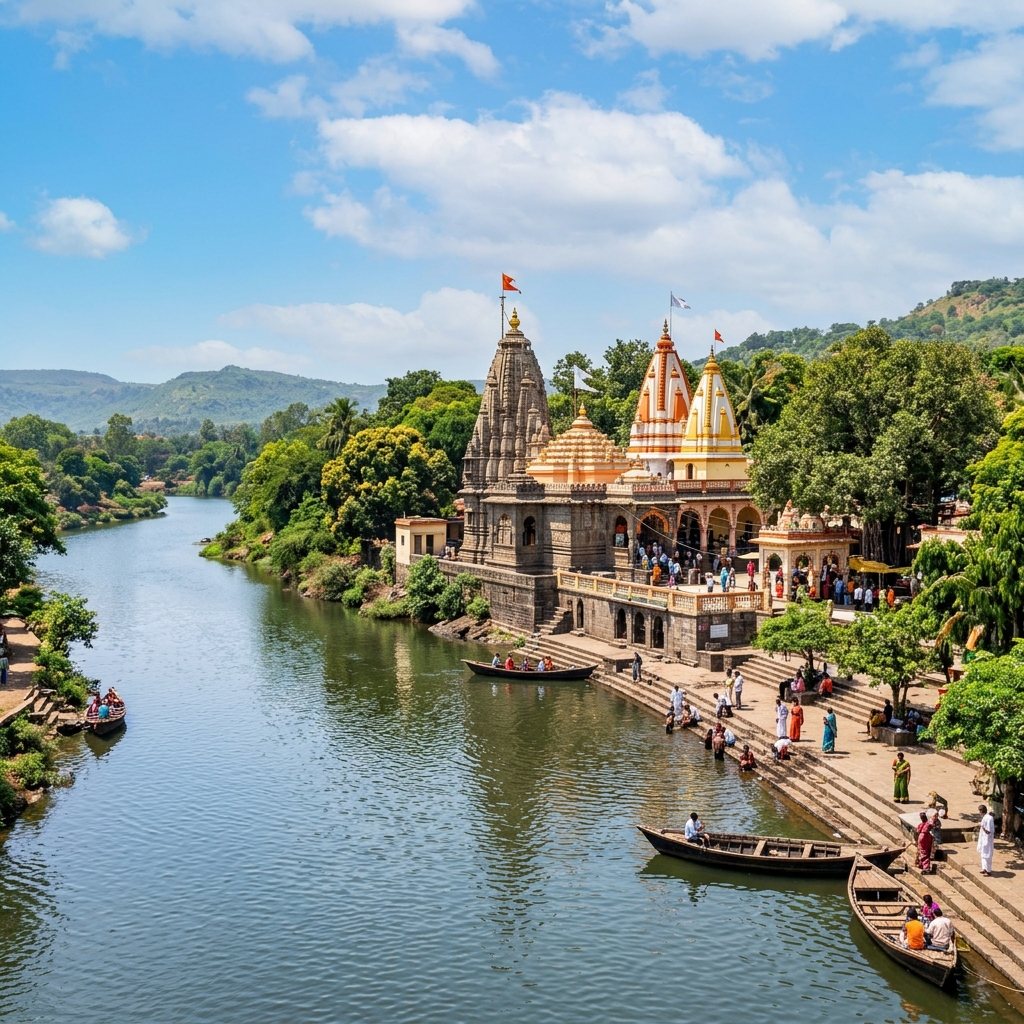
Omkareshwar (IAST: Ōṃkārēśvar) is a Hindu temple dedicated to God Shiva. It is located in Khandwa in Indian state Madhya Pradesh. It is one of the 12 revered Jyotirlinga shrines of Shiva. It is on an island called Mandhata or Shivapuri in the Narmada river at Khandwa district in Madhya Pradesh, India; the shape of the island is said to be like the Devanagari ॐ symbol.
There are two main temples of Lord Shiva here, one to Omkareshwar (whose name means “Lord of Omkara or the Lord of the Om sound”) located in the island and one to Mamleshwar (Amaleshwar) (whose name means “Immortal Lord” or “lord of the Immortals or Devas”) located on the south bank of Narmada River on the mainland.
Legends and history
As per Hindu legend, Vindya, the deity controlling the Vindyachal mountain range was worshipping Shiva to propitiate himself from the sins committed. He created a sacred geometrical diagram and a Lingam made of sand and clay. Shiva was pleased with the worship and believed to have appeared in two forms, namely Omkareshwar and Amaleswara. Since the mud mound appeared in the form of Om, the island came to be known as Omkareswar. There is a shrine for Parvati and Ganapati in the temple.
The second story relates to Mandhata and his son’s penance. King Mandhata of Ikshvaku clan (an ancestor of Lord Ram) worshipped Lord Shiva here until the Lord manifested himself as a Jyotirlinga. Some scholars also narrate the story about Mandhata’s sons-Ambarish and Muchukunda, who had practiced severe penance and austerities here and pleased Lord Shiva. Because of this, the mountain is named Mandhata.
The third story from Hindu scriptures says that once upon a time there was a great war between Devas (gods) and Danavas (demons), in which Danavas won. This was a major setback for Devas and hence Devas prayed to Lord Shiva. Pleased with their prayer, Lord Shiva emerged in the form of Omkareshwar Jyotirlinga and defeated Danavas.
Philosophy of Omkaar – Advait Matt says Omkaar is composed of two words, Om (sound) and Akaar (srishti). Both are one not two since Advait means “not two”. Om beej mantra of Srishti, itself is creator of Srishti.
Adi Shankara’s Cave – Omkareshwar is said to be the place where Adi Sankara met his guru Govinda Bhagavatpada in a cave. This cave can be found even today just below the Shiva temple where an image of Adi Shankara has been installed.
Location
It is situated in the Mandhata city (also known as Omkareshwar) in Khandwa district of Madhya Pradesh state in India. It is about 16 km from Barwaha in Madhya Pradesh. Omkareshwar is formed by the sacred river Narmada. This is one of the most sacred rivers in India and is now home to one of the world’s biggest dam projects. The temple is situated on Mandhata or Shivpuri island on the banks of Narmada and river Kaveri (a tributary of Narmada). The island is 4 KM long and 2.6 km2 (2,600,000 m2) in area and can be approached by boats and bridge.

Mahakaleshwar Jyotirlinga is a Hindu temple dedicated to Shiva and is one of the twelve Jyotirlingams, shrines which are said to be the most sacred abodes of Shiva. It is located in the ancient city of Ujjain in the state of Madhya Pradesh, India. The temple is situated on the side of the holy river Shipra. The presiding deity, Shiva in the lingam form is believed to be Swayambhu, deriving currents of power (Shakti) from within itself as against the other images and lingams that are ritually established and invested with mantra-shakti.
The idol of Mahakaleshwar is known to be dakshinamukhi, which means that it is facing the south. This is a unique feature, upheld by the tantric shivnetra tradition to be found only in Mahakaleshwar among the 12 Jyotirlingas. The idol of Omkareshwar Mahadev is consecrated in the sanctum above the Mahakal shrine. The images of Ganesh, Parvati and Karttikeya are installed in the west, north, and east of the sanctum sanctorum. To the south is the image of Nandi, the vehicle of Shiva. The idol of Nagchandreshwar on the third storey is open for darshan only on the day of Nag Panchami. The temple has five levels, one of which is underground. The temple itself is located in a spacious courtyard surrounded by massive walls near a lake. The shikhar or the spire is adorned with sculptural finery. Brass lamps light the way to the underground sanctum. It is believed that prasada (holy offering) offered here to the deity can be re-offered unlike all other shrines.
The presiding deity of time, Shiva, in all his splendor, reigns eternally in the city of Ujjain. The temple of Mahakaleshwar, its shikhar soaring into the sky, an imposing façade against the skyline, evokes primordial awe and reverence with its majesty. The Mahakal dominates the life of the city and its people, even in the midst of the busy routine of modern preoccupations, and provides an unbreakable link with ancient Hindu traditions.
On the day of Maha Shivaratri, a huge fair is held near the temple, and worship goes on through the night.
Devotees are not allowed to bring bags , mobile phones and cameras during the visit . Lockers and Cloak Rooms are there for devotees where they can keep their belongings.
Also an awesome spectacle, with huge participation of devotees, is the procession of God Mahakaal in his Palanquin, called Shahi Savaari, to the river Kshipra, on last Monday of the holy period of Sawaan during the months of Shraavana or Bhadrapada
References in Hindu scriptures
According to the Puranas, the city of Ujjain was called Avantika and was famous for its beauty and its status as a devotional epicenter. It was also one of the primary cities where students went to study holy scriptures. According to legend, there was a ruler of Ujjain called Chandrasena, who was a pious devotee of Shiva and worshiped him all the time. One day, a farmer’s boy named Shrikhar was walking on the grounds of the palace and heard the King chant the Shiva’s name and rushed to the temple to start praying with him. However, the guards removed him by force and sent him to the outskirts of the city near the river Kshipra. Rivals of Ujjain, primarily King Ripudamana and King Singhaditya of the neighboring kingdoms decided to attack the Kingdom and take over its treasures around this time. Hearing this, Shrikhar started to pray and the news spread to a priest named Vridhi. He was shocked to hear this and upon the urgent pleas of his sons, started to pray to Shiva at the river Kshipra. The Kings chose to attack and were successful; with the help of the powerful demon Dushan, who was blessed by Brahma to be invisible, they plundered the city and attacked all the devotees of Shiva.
Upon hearing the pleas of His helpless devotees, Shiva appeared in his Mahakala form and destroyed the enemies of King Chandrasena. Upon the request of his devotees Shrikhar and Vridhi, Shiva agreed to reside in the city and become the chief deity of the Kingdom and take care of it against its enemies and to protect all His devotees. From that day on, Shiva resided in His light form as Mahakala in a Lingam that was formed on its own from the powers of Shiva and his consort, Parvati. Shiva also blessed his devotees and declared that people who worshipped Him in this form would be free from the fear of death and diseases. Also, they would be granted worldly treasures and be under the protection of the Shiva himself.
Bharthari was the elder son of King Gandharva-Sena, and received the kingdom of Ujjain from the celestial god Indra and the King of Dhara.
When Bharthari was king of ‘Ujjayani’ (modern-day Ujjain) in his state there lived a Brahman who after years of austerities was given the fruit of immortality from the celestial tree of Kalpavriksha. The Brahman presented the same to his monarch, Raja Bharthari, who in turn, passed it on to his love, the beautiful, Pinglah Rani or Ananga Sena Raja Bhartrhari’s last and youngest wife. The queen, being in love with the Head police officer of the state, Mahipaala, presented the fruit to him, who further passed it on to his beloved, Lakha, one of the maids of honour. Eventually, Lakha being in love with the king presented the fruit back to the king. Having completed the circle, the fruit revealed the downsides of infidelity to the king, he summoned the queen and ordered her beheading, and ate the fruit himself. After that, he abdicated the throne, and became a religious mendicant.
He later became a disciple of Pattinatthar who first indulged in an argument about samsari and sanyasi with king Bhartrhari. Later during the conversation pattinathar said that all women have ‘dual mind’ and it might be the true case even with Parameswari. King conveyed this news to Rani Pingalah and she ordered Pattinathar to get punished and to sit in kalu maram (tree, whose top portion would be sharpened like a pencil and whole tree is fully coated with oil, a person who is punished to sit in the top will be split into 2 pieces), they tried to kill Pattinathar, but Kalu Maram started burning and nothing happened to Pattinathar, the king came to know this news and went directly to Pattinathar and asked him to get ready to die the next day, but Pattinathar replied, ” I’m ready right now, to die”. The next day king came with tears in his eyes and released saint from jail because he actually noticed Queen Pingalah in love with horsemen that night, He threw away his empire, wealth, even full coat dress and dressed in a simple kovanam (loincloth), the king became a disciple of Pattinatthar and got moksha (salvation) in the Srikalahasteeshwara Temple in Andhra Pradesh which houses the Vayu Lingam, a part of the Pancha Bhoota Sthalams of Shiva.
Kalidasa (c. 2nd–1st century BCE), the great Sanskrit poet of the times who was probably a contemporary of king Pushyamitra Sunga, has mentioned about the rituals of the temple in his works in Meghadūta. He mentions about the nada-aradhana, the performance of art and dance during the evening rituals.
History
The temple complex was destroyed by Sultan Shams-ud-din Iltutmish during his raid of Ujjain in 1234-5.The Jyotirlinga was dismantled and believed to be thrown into a nearby ‘Kotiteerth Kunda’ (a pond neighbouring the temple) with the Jaladhari (a structure supporting the Lingam) stolen during the invasion.
The present structure was built by the Maratha general Ranoji Shinde in 1734 CE after Baji Rao I appointed him to collect taxes in malwa region. Further developments and management was done by other members of shinde dynasty, including Mahadji Shinde (1730–12 February 1794) and Daulat Rao Shinde’s wife Baiza Bai. (1827–1863). During the reign of Jayajirao Shinde (until 1886), major programs of the then Gwalior State used to be held at this temple.]
The Maratha Empire regime was established in Ujjain in the 4th decade of the 18th Century. The administration of Ujjain was assigned by Peshwa Bajirao-I to his faithful commander Ranoji Shinde, The Diwan of Ranoji was Sukhatanakar Ramchandra Baba Shenavi who was very wealthy he decided to invest his wealth for religious purposes. In this connection, he re-built the Mahakaleshwar Temple during the 4th-5th decades of the 18th Century.
After India became independent in 1947, the Mahakaleshwar Dev Sthan Trust was replaced by the municipal corporation of Ujjain. Nowadays it is under the collectorate office of Ujjain districrt.
Grishneshwar Jyotirlinga Temple
Shalinecabs Grishneshwar Jyotirlinga Darshan
Shalini cabs We are the best in the city for providing the Grishneshwar Jyotirlinga Temple.
Tourist Taxi service. The best option for traveling for Grishneshwar Jyotirlinga Temple. Is to book a cab that can be done with easy with our online booking mobile Shalini Cab App. Or
Book from Our Website www. shalinicabs.com
Now you do not need to do the stressful journey by bus when you can travel in the comfort of the AC car by hiring a taxi for Grishneshwar Jyotirlinga Temple. We can help you avoid all the hassles of traveling on public transport. Choose us for Grishneshwar Jyotirlinga Temple .Taxi services is the best option one can get in Mumbai city. With excellent services, you can also now book your cabs in Mumbai for Airport Taxi, City Taxi, Rental Taxi, Outstation, and One way trips. We have a wide range of taxis for travel to Mumbai City. You need to spare a minimum of 2 days to visit Grishneshwar Jyotirlinga Temple. all the places. Just by paying a nominal booking amount, you can book your AC car.
Why Choose Us?
We are the best car rental service provider platform in the city. Our best services make us stand out from other service providers. We have gained the faith and trust of our customers over the years by offering the best services in the market.
Shalini Cabs takes pride in providing the best quality with a timely, and reliable taxi for Grishneshwar Jyotirlinga Temple. Services. If you want to travel in optimal time and enjoy your journey, then Shalini Cabs are the best option to hire a cab for Grishneshwar Jyotirlinga Temple.
Car hire, you can now travel to your favorite location. Be it for local sightseeing or going for a trip, Shalini Cabs is the best platform to book cabs for Grishneshwar Jyotirlinga Temple.at Shalini Cabs, we have car options like sedans, hatchbacks, and Primesuv, Suv.at Shalini Cabs, and you will find an affordable taxi fare for Grishneshwar Jyotirlinga Temple.cab booking.
Doorstep pick up
We offer doorstep pick-up for our guests. We have trained high-rated and verified chauffeur, Fully Sanitize Car. Covid -19 Vaccination done by Chauffer, Police Character Certified Chauffer. Dose with a good driving experience to give you a smooth travel experience. They will Pick you up from anywhere in Mumbai and drop you at your final destination. Shalini Cabs offers the Grishneshwar Jyotirlinga Temple. Taxi service at affordable rates.
Call us at 9323000111 for the Grishneshwar Jyotirlinga Temple. Cab rental service to travel by road. Our Grishneshwar Jyotirlinga Temple. car rental package is the best in the taxi industry. Grishneshwar Jyotirlinga Temple. Grishneshwar Jyotirlinga Temple. Fare is the best when compared with other players. We offer you the best fares for Grishneshwar Jyotirlinga Temple. Hire Grishneshwar Jyotirlinga Temple. Taxi services at Shalini Cabs and enjoy your trip
The temple structure was destroyed by the Delhi Sultanate in 13th and 14th-century. The temple went through several rounds of rebuilding followed by re-destruction during the Mughal-Maratha conflict. It was rebuilt in the current form in the 18th century under the sponsorship of queen Ahilyabai Holkar of Indore, after the fall of the Mughal Empire.[4] It is presently an important and active pilgrimage site of the Hindus and attracts long lines of devotees daily. Anyone can enter the temple premises and its inner chambers, but to enter the sanctum sanctorum core (garbha-ghrya) of the temple, the local Hindu tradition demands that men must go bare-chested.[2]
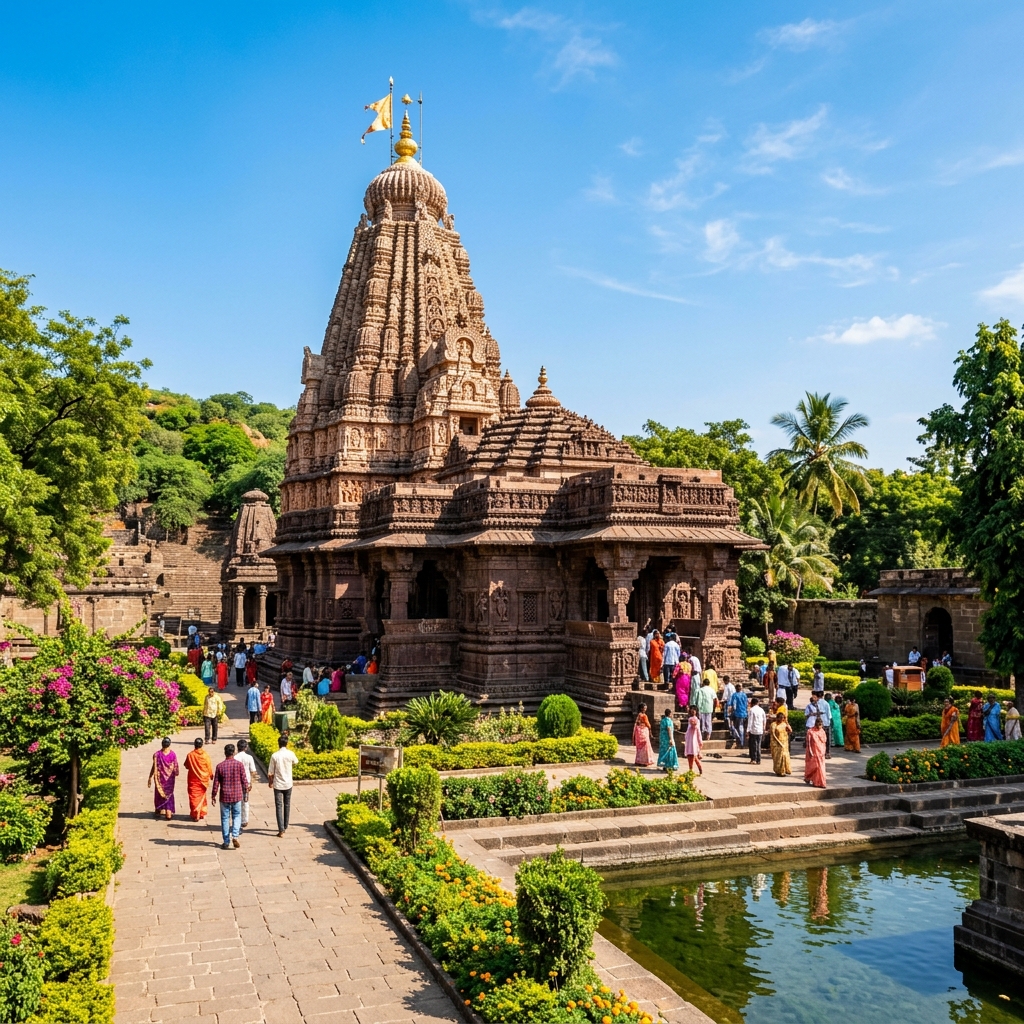
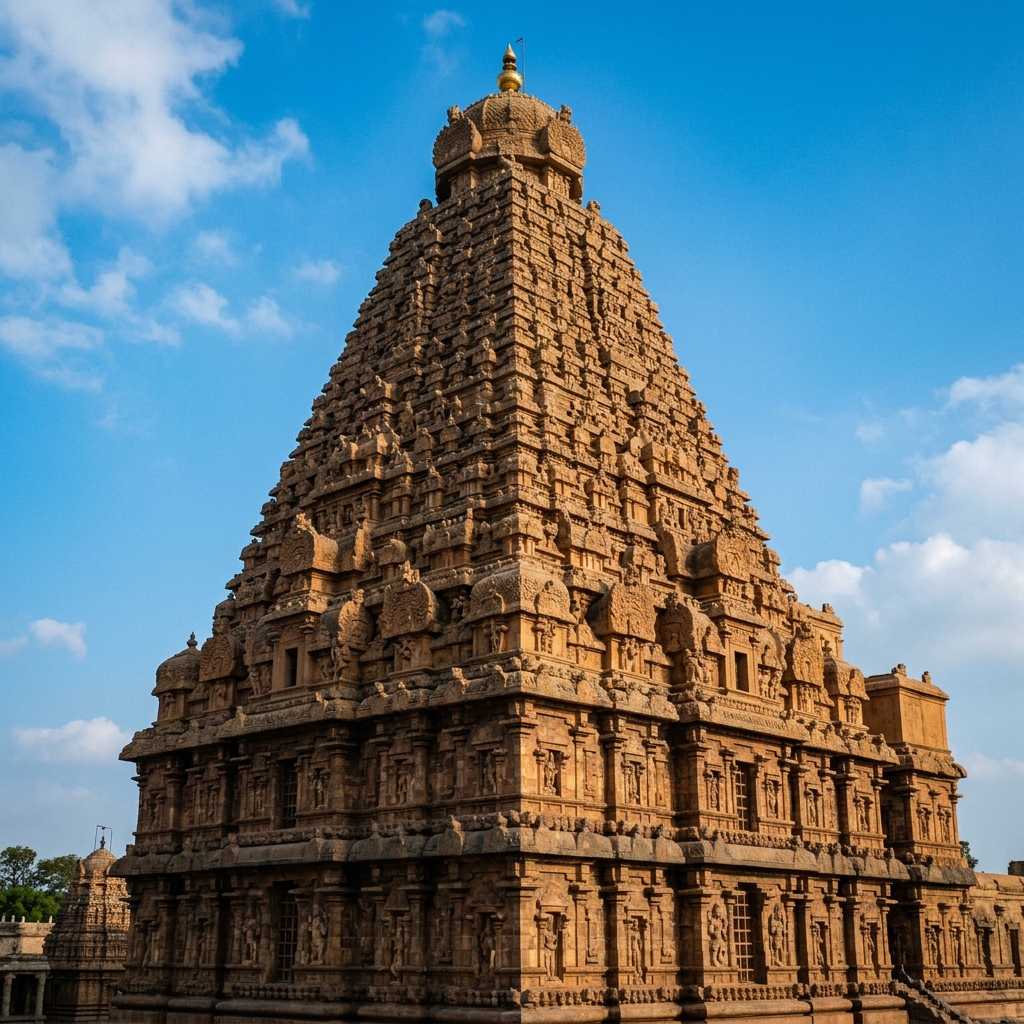
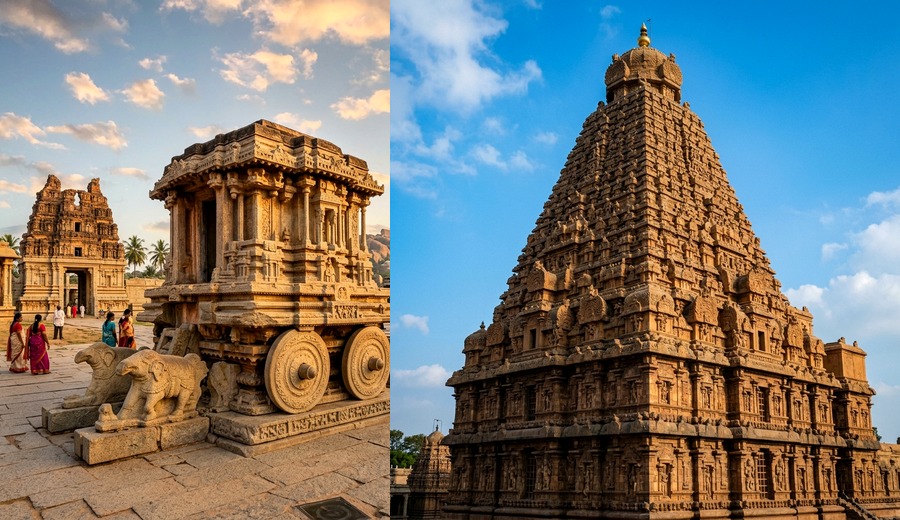
The Grishneswar temple is an illustration of maratha temple architectural style and structure. The temple, built of red rocks, is composed of a five-tier shikara. The temple was re-constructed by Maloji Bhosale of Verul, (grandfather of Shivaji) in the 16th century and later again by queen Ahilyabai Holkar in the 18th century. She is credited with rebuilding some of major Hindu temples such as the Kashi Vishvanath temple in Varanasi, a Vishnu temple in Gaya, and a much larger Shiva Jyotirlinga temple in Somnath Temple.
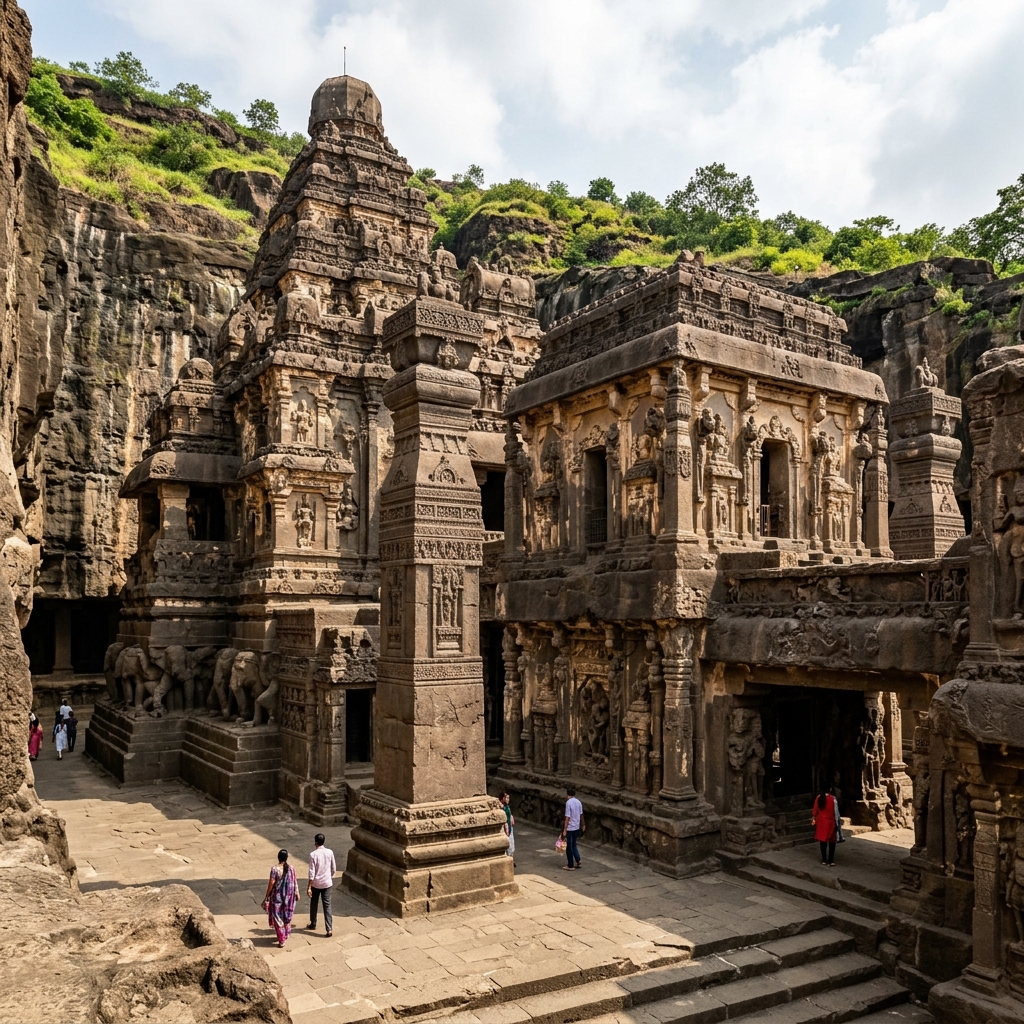
This 240 ft x 185 ft temple is the smallest Jyotirlinga temple in India. Halfway up the temple, Dashavataras of Vishnu are carved in red stone. A court hall is built on 24 pillars. On these pillars, there are carvings summarizing various legends and mythologies of Shiva. The Garbhagriha measures 17 ft x 17 ft. The Lingamurty faces eastward. There is a Nandi bull in the court hall. Ghrishneshwar Temple is a revered temple, situated in the state of Maharashtra. The temple houses carvings and sculptures of many Hindu gods and goddesses.
Grishneshwar Jyotirlinga Temple, sometimes referred to as the Ghrneshwar or Ghushmeshwar Temple, is one of the shrines dedicated to Lord Shiva that is referenced in the Shiva Purana. The word Ghrneshwara means “lord of compassion”. The temple is an important pilgrimage site in the Shaiva tradition of Hinduism, which considers it as the last or twelfth Jyotirlinga (linga of light). This pilgrimage site is located in Ellora (also called Verul), less than a kilometer from Ellora Caves – a UNESCO World Heritage Site. It is about 30 kilometres (19 miles) north-west of the city of Aurangabad, and about 300 kilometres (190 miles) east-northeast from Mumbai, Maharashtra, India .
From Mumbai Grishneshwar Jyotirlinga Temple is approximately 350 km travel time approximately 9 hours
you have to plan for Two days
Fare Details
Aundha Nagnath Temple
Aundha Nagnath is one of the 12 Jyotirlingas of India. Among the 12 Jyotirlingas, 5 lies in Maharashtra. Aundha Nagnath is considered to be the first Jyotirlinga where Shiva is worshipped. It is believed that the Aundha Nagnath was built by Yudhisthira, the eldest Pandav, while they were sent in exile for 14 years. The Aundha Nagnath has a Hemadpanthi style of architecture spreading for over 60,000 sq ft area. The most unique part of this temple is that the idol of Nandi is not present in front of the shrine of Mahadeva. A separate Nandikeshwara temple is built beside the main temple. The main temple is surrounded by small temples of 12 Jyotirlingas on all four sides. In total there are 108 Shiva temples and 68 shrines of Shiva are to be found here. Besides, there are idols and temples of VedavyasaLinga, Bhandareshwar, Nilakanteshwar, Ganapati, Dattatreya, Muralimanohar, Dasavatar. Another fascinating part of the Aundha Nagnath temple is that snakes flanking the Shiva linga with their hoods are often seen here. The temple has exquisite architectural beauty. It has large corridors and an 8 pillared court hall. The Shiva Linga is located in Garbhagriha.
Aundha Nagnath Temple is an ancient Shiva temple, 8th Jyotirlinga, located at Aundha Nagnath in Hingoli district of Maharashtra, India. Aundha Nagnath Nageshwaram gathered to be the eighth of the twelve jyotirlingas in India, a critical place of journey. The present sanctuary is said to have been worked by the Sauna Yadava tradition and dates to the thirteenth century. The main sanctuary is said to be from the time of the Mahabharata and is accepted to have been developed by Yudhishthira, the oldest of the Pandavas when they were removed for a long time from Hastinapur.
It has been expressed that this sanctuary building was seven-storyed before it was sacked by Aurangzeb. The sanctuary covers a zone of 669.60 sq mt 7200 sq ft and stature of 18.29 m 60 ft The aggregate zone in which sanctuary grounds is spread is around 60,000 sq. ft. Aside from the religious importance, the sanctuary itself merits seeing for its unfathomably lovely carvings. The base of the present sanctuary is in Hemadpanti engineering even though its upper segment was repaired amid later period and is in the style which was common amid the Peshwa’s administration. You can come and explore this place.
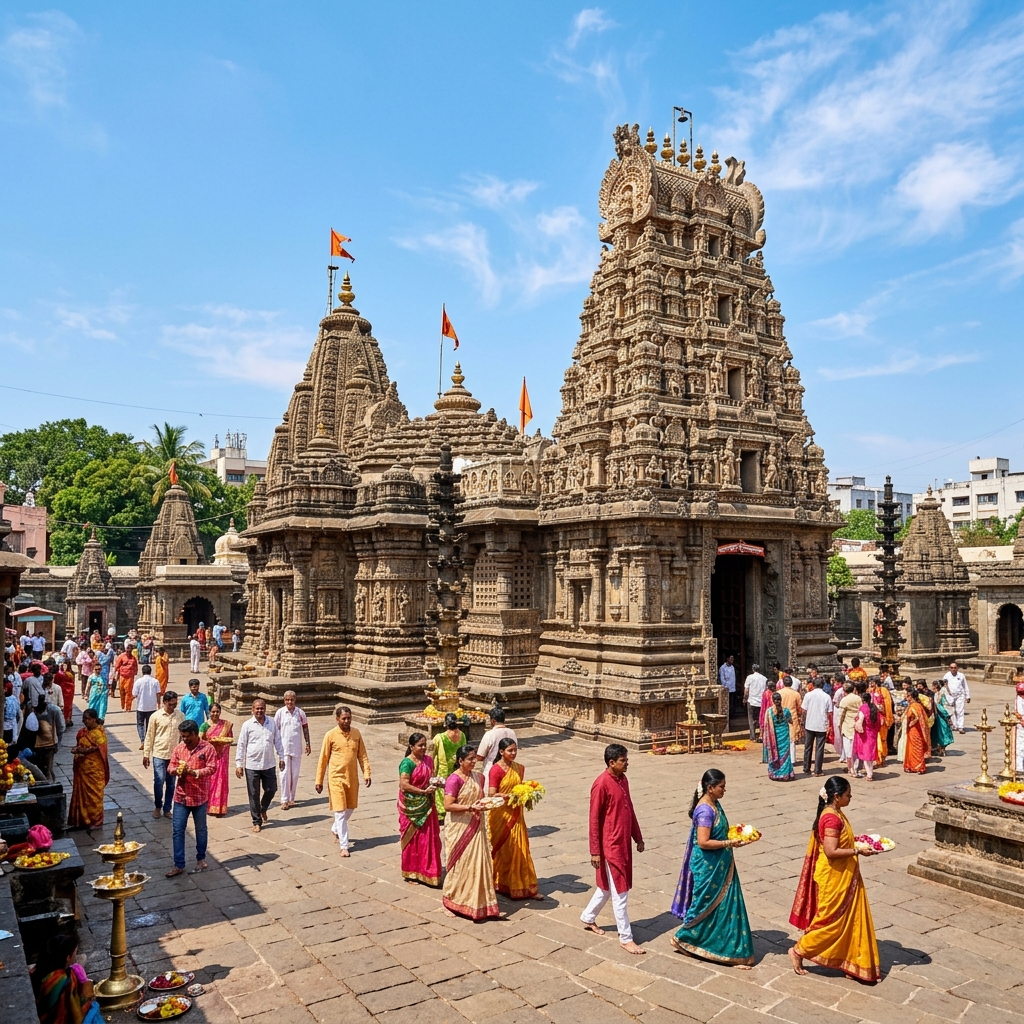
In the renowned Beed district of Maharashtra, rests yet another ‘jyotirlinga’ temple of India on the top of a small hill – Parali Vaijnath Temple. Popularly known as the ‘Vaijanath Temple,’ each corner of the temple whispers the secrets of the mythological stories, never revealing the full story. Somewhere like the other ‘jyotirlinga’ temples, Parali Vaijnath too has a story to tell; not just one but many.
ACCORDING TO THE LEGENDS
One such story is from the time of Ramayana. It is said that Ravana performed a Tapasya and chanted Shiva Tandava Stotram in his soulful voice. Impressed by Ravana’s dedication, Lord Shiva asked him about his wishes. Ravana’s request was a special lingam. Lord Shiva handed over a special lingam to Ravana to take home to Lanka with strict instructions that it should not be placed on the ground till it is deified at a final destination. Lord Shiva fulfilled all the wishes of Ravana. While returning home, Ravana met a boy to whom he handed over the lingam. The lingam started getting too heavy with every minute and the boy kept it on the ground. This is how the jyotirlinga happens to be here. The belief is that Shiva decided to reside here in the form of Vaidyanatheshwar.
To reach the sanctum of the Parali Vaijnath Temple, there are two doors – north and south. Within the temple complex, there is a huge teak wood hall and spacious corridor for circumambulation. Further enhancing the beauty of the temple are two ponds that too have religious significance.
BEST TIME TO VISIT
Celebration on a large scale takes place in several festivals like Gudi Padawan, Vijaya Dashami, Tripuri Pournima, and Mahashivaratri. Also, it is considered auspicious to have ‘darshan’ of the auspicious ‘shiv linga’ during the Hindu calendar month of Shravan.
OPENING/CLOSING/ARTI TIME
- Shadopachar: 5:00 AM
- Shringar Pooja: 6:00 PM
ENTRY FEE
Free
Shani Shingnapur
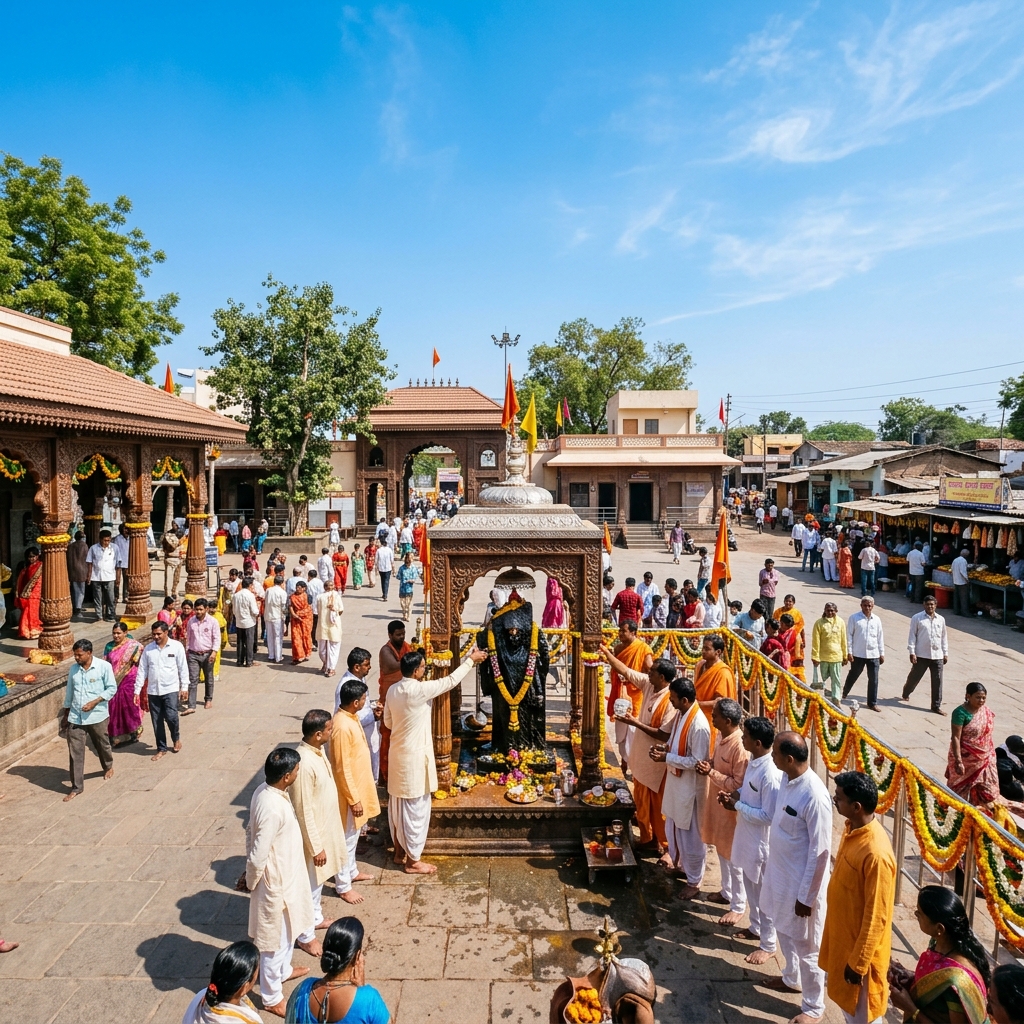
Shani Shignapur Temple is a Jeet Devasthan (alive temple) in the Ahmednagar district, well-known for the magical and powerful Lord Shani, who is believed to reside in a black stone to date. The Hindu God symbolizing the planet Saturn is referred to as Swayambhu, which means that he has emerged himself in the form of the black stone that scores lakhs of devotees every year. The trust of people in the lord is so strong that none of the houses in the wondrous village has doors and locks as people believe that Lord Shani is protecting their valuables from thieves.
On some of the holiest days like Saturdays, Amavasya, and Shri Shaneshchar Jayanti, the enthusiasm and vehemence rise to the next level. Some Hindus worship Lord Shani to please him as the influence of planet Saturn on anyone’s life is considered as bad luck.
A visit to the Shani Shignaour Temple surely gives hope that your remaining life will be smooth and that Lord Shani will bestow only happiness upon you. With no long queues and waiting period, you can easily get darshan of the divine power.
Trimbakeshwar
https://goo.gl/maps/BZe7pcRyBxnyca9y8

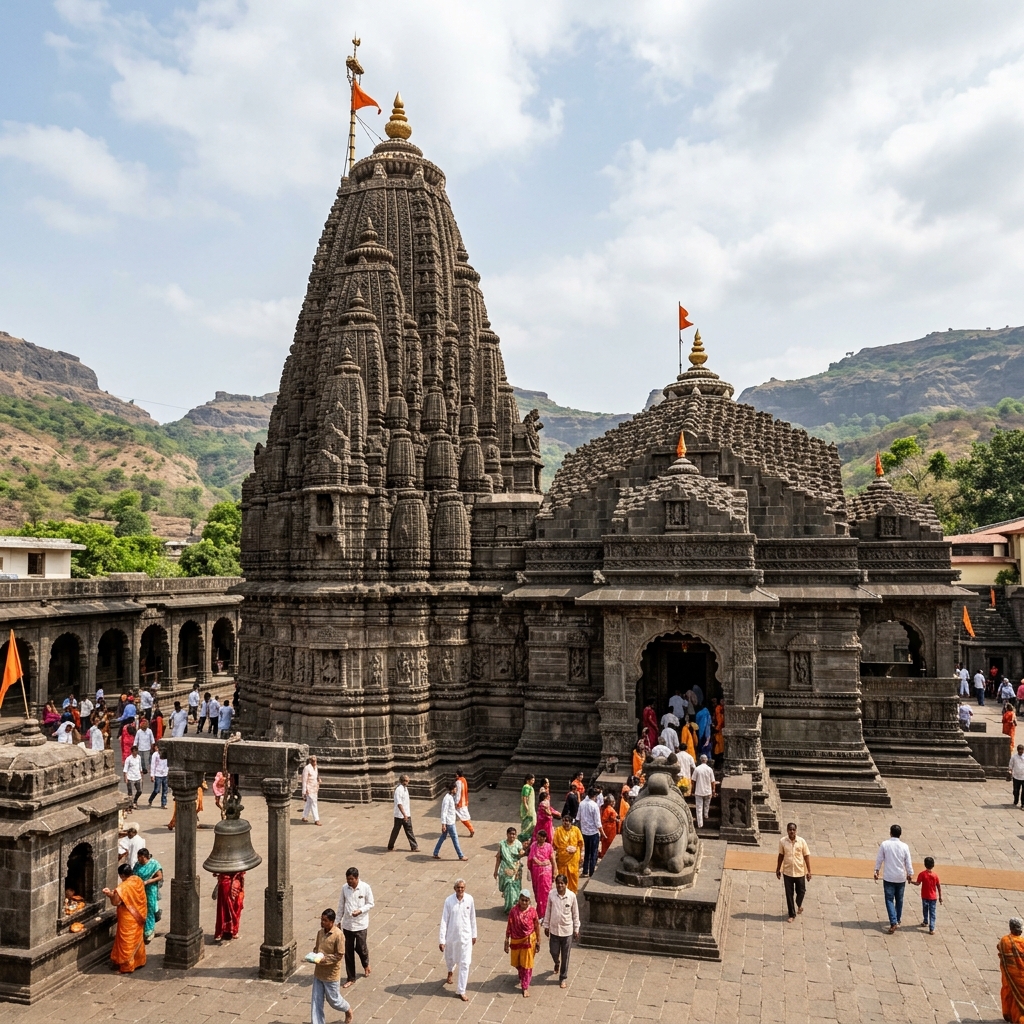
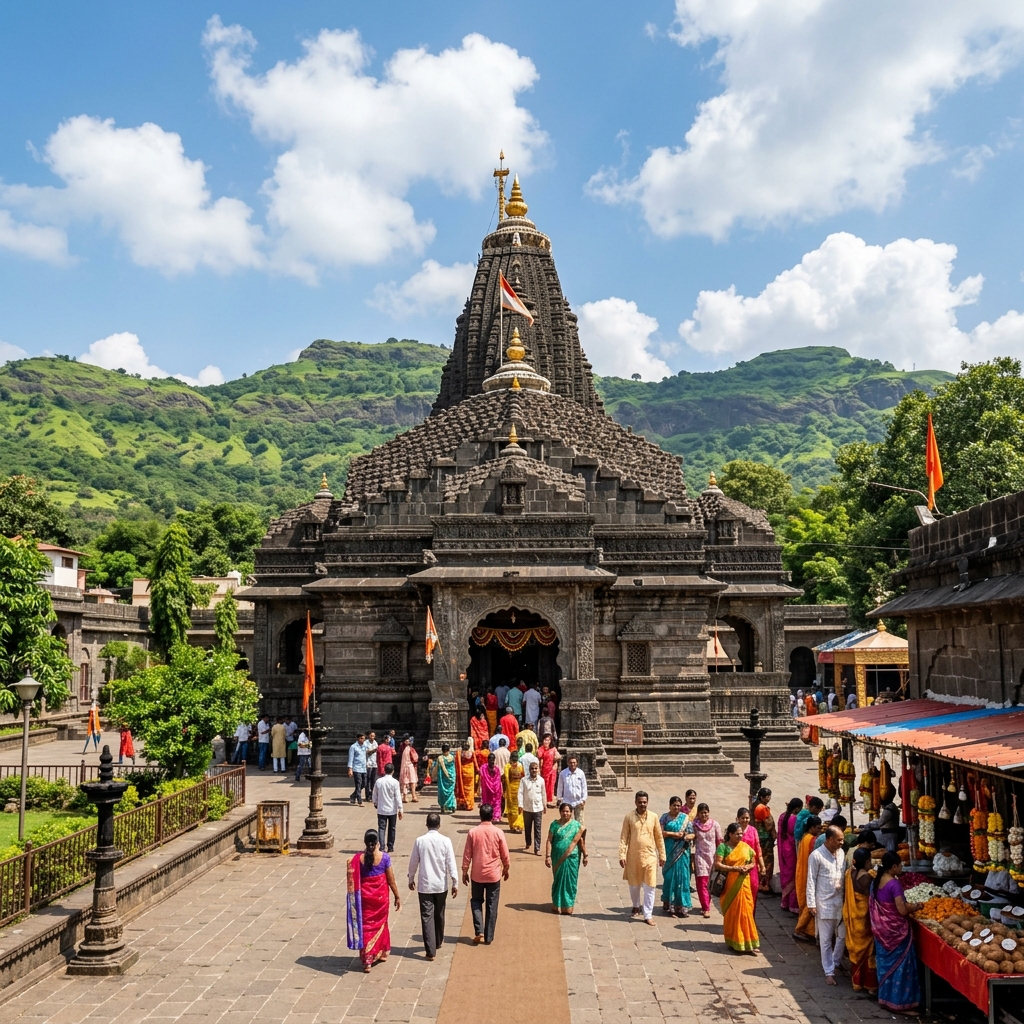
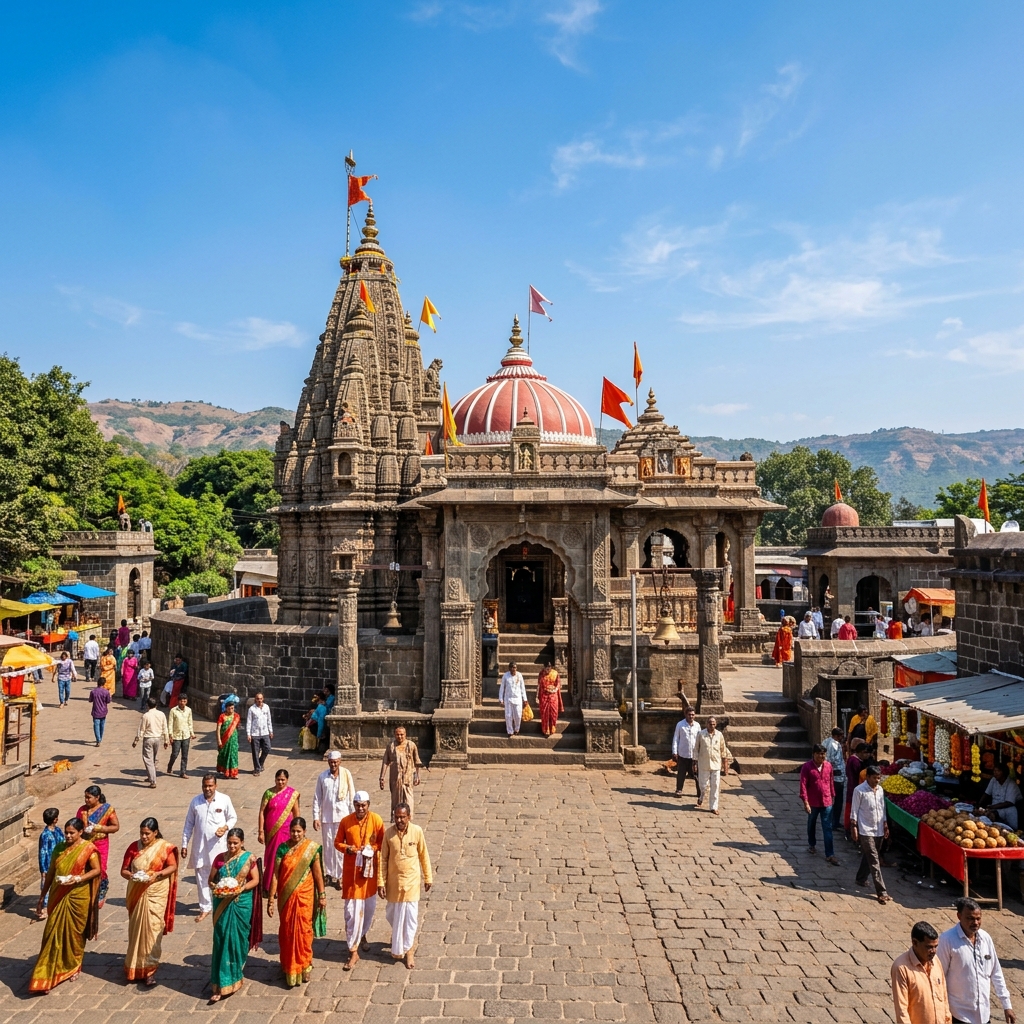
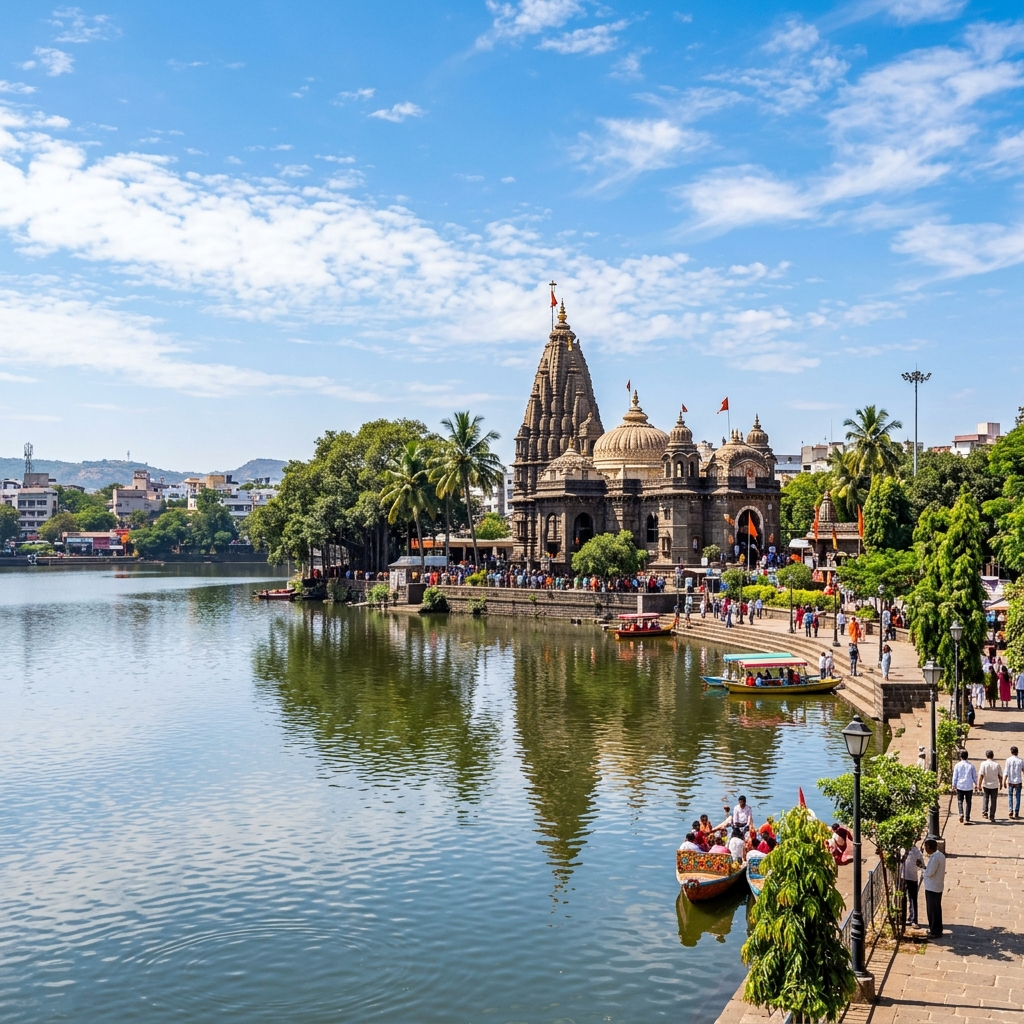
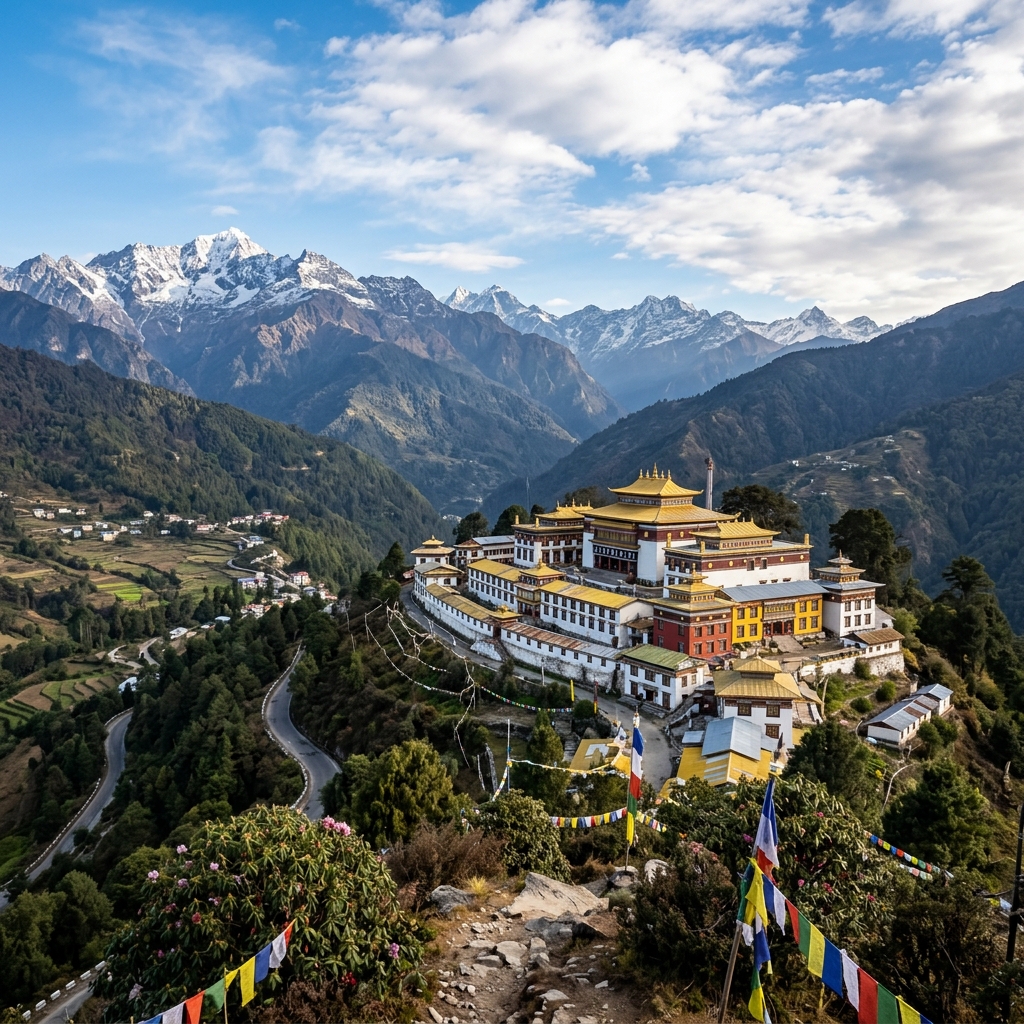
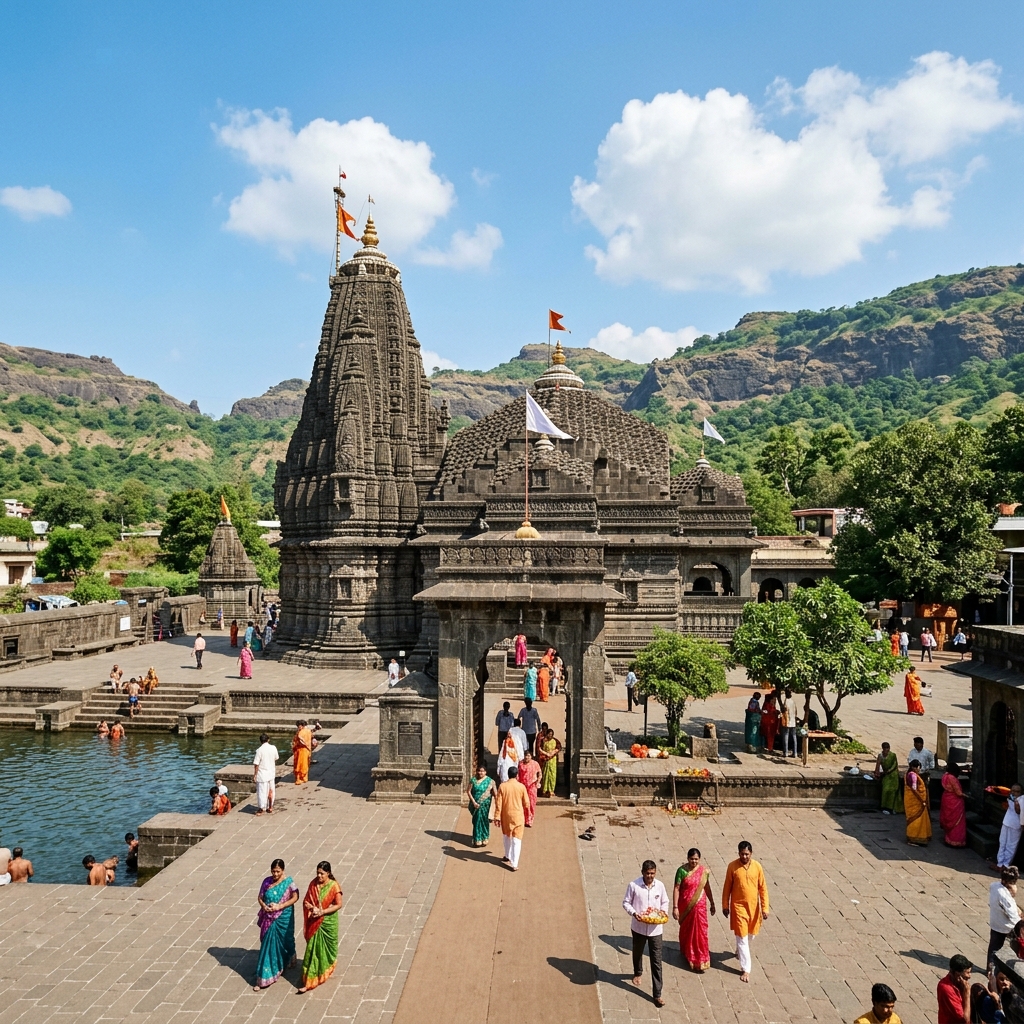
The holy temple of Trimbakeshwar is considered to be one of the holiest Lord Shiva temples in India. It houses one of the 12 Jyotirlingas that are renowned pilgrimage centers in the country. The temple is nestled on the foot of the massive Brahmagiri Hills in the holy city of Trimbak. Such is the piousness of this beautiful city that has been mentioned in the Mrityunjaya Mantra. The temple was developed back in the eighteenth century by Peshwa Nana Saheb, the then Maratha Ruler. This is an outstanding piece of artwork the architecture of which is worth admiring. The sanctity of the temple is further enhanced by a kund or Kusavarta which is the source of the holy river water of Godavari. The Jyotirlinga features three faces that symbolize Lord Rudra, Lord Brahma, as well as Lord Vishnu, three different gods of the Hindus. The outside of the temple features some local vendors selling crispy corns which you can use to satiate your hunger craving.
Distance from City Centre – 28 km
Approximate Time to Explore the Place – Half a day
Visiting Hours – 05:30 AM – 09:00 PM
Entry Fee – No visiting hours
Return journey to Mumbai 5hrs approximately
https://goo.gl/maps/4S1jNQ6QQrzLLsDeA

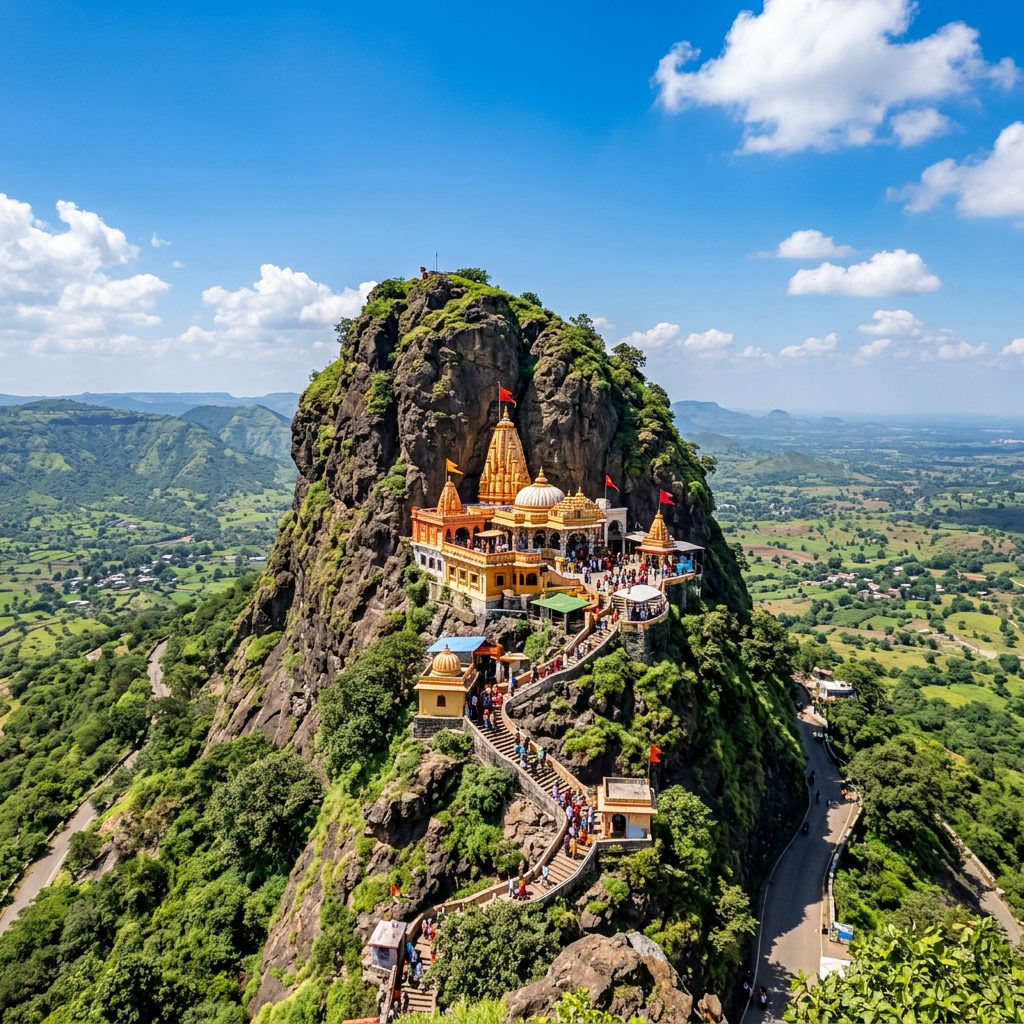
Bhimashankar is a popular temple town. It is among one of the twelve traditional ‘Jyotilingam’ shrines of Lord Shiva in India.
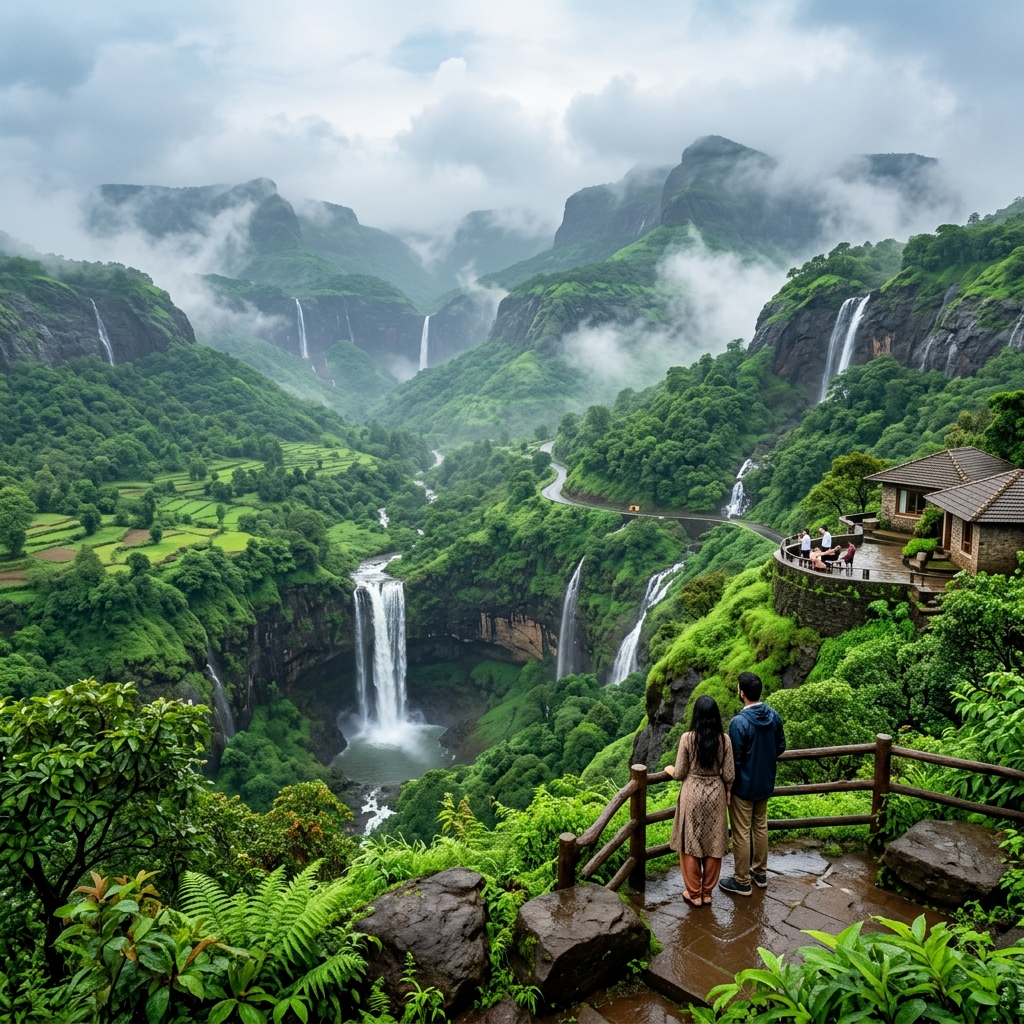
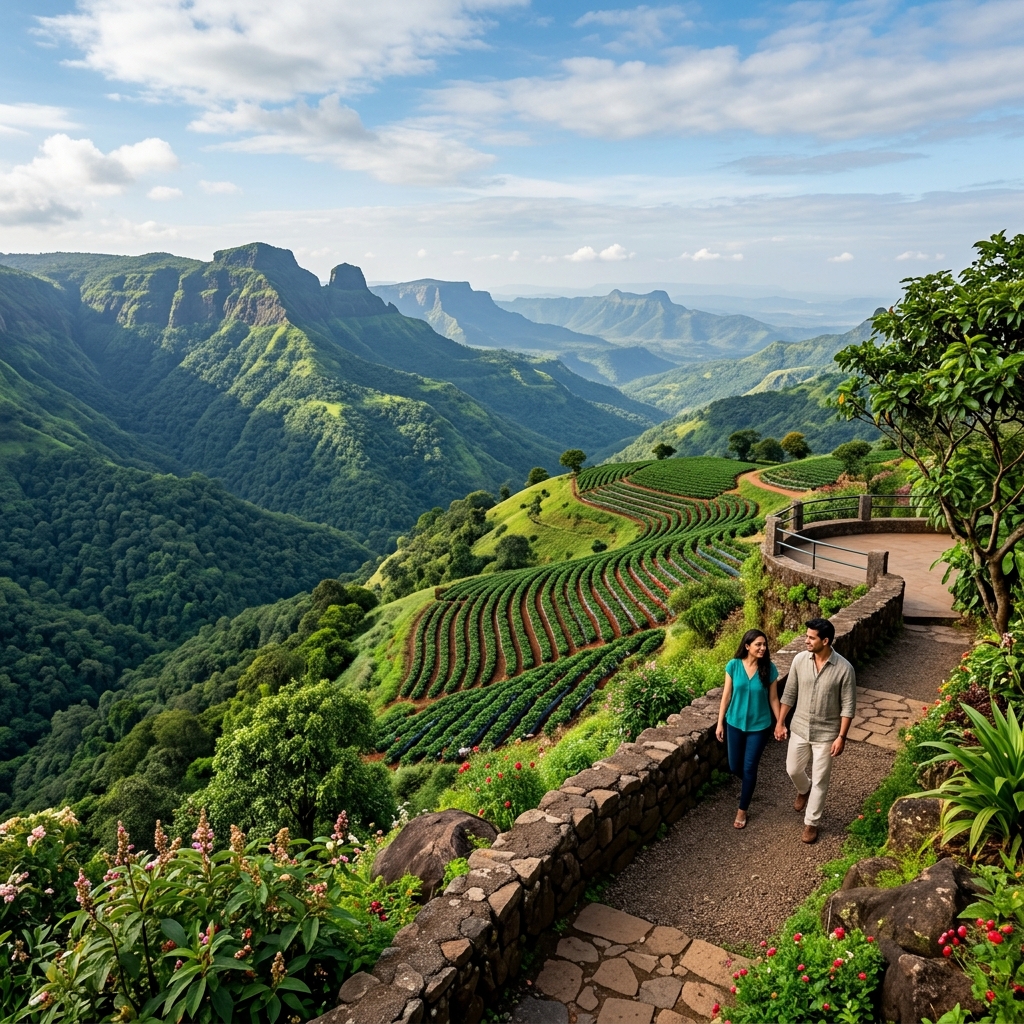
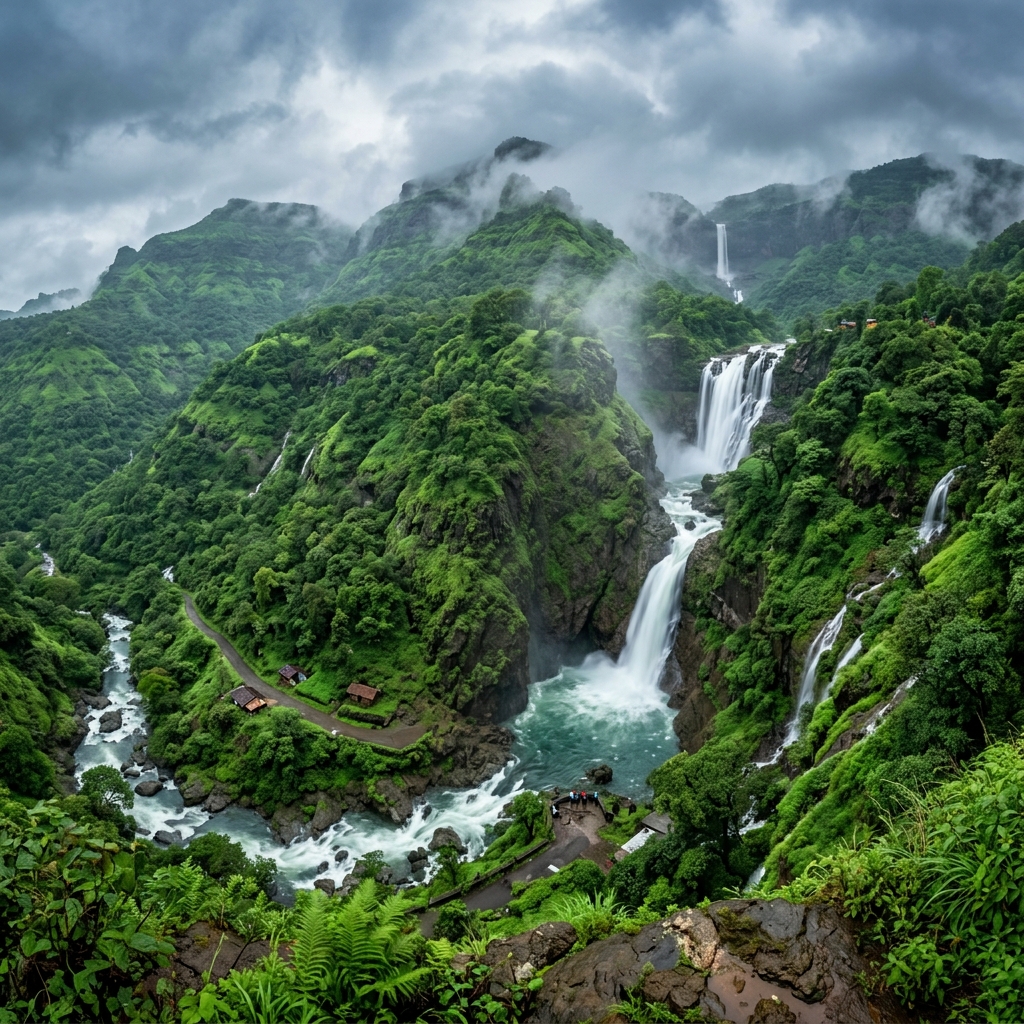
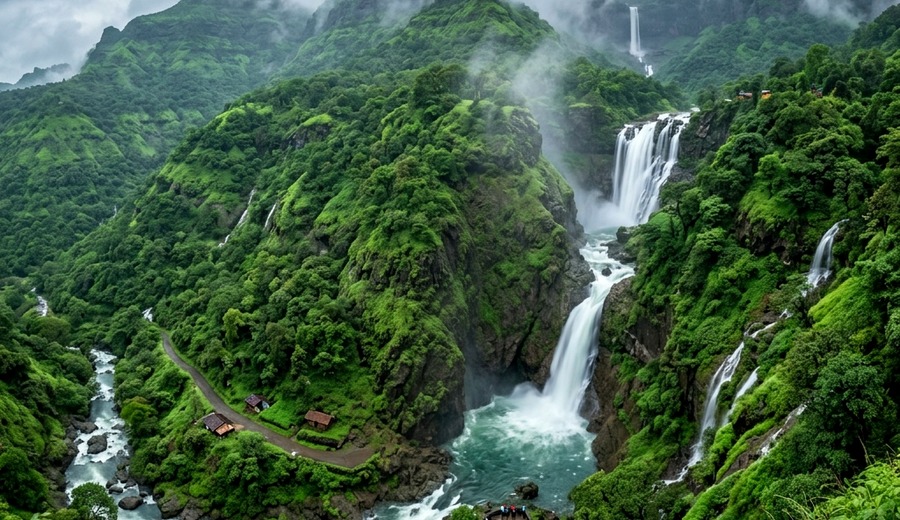
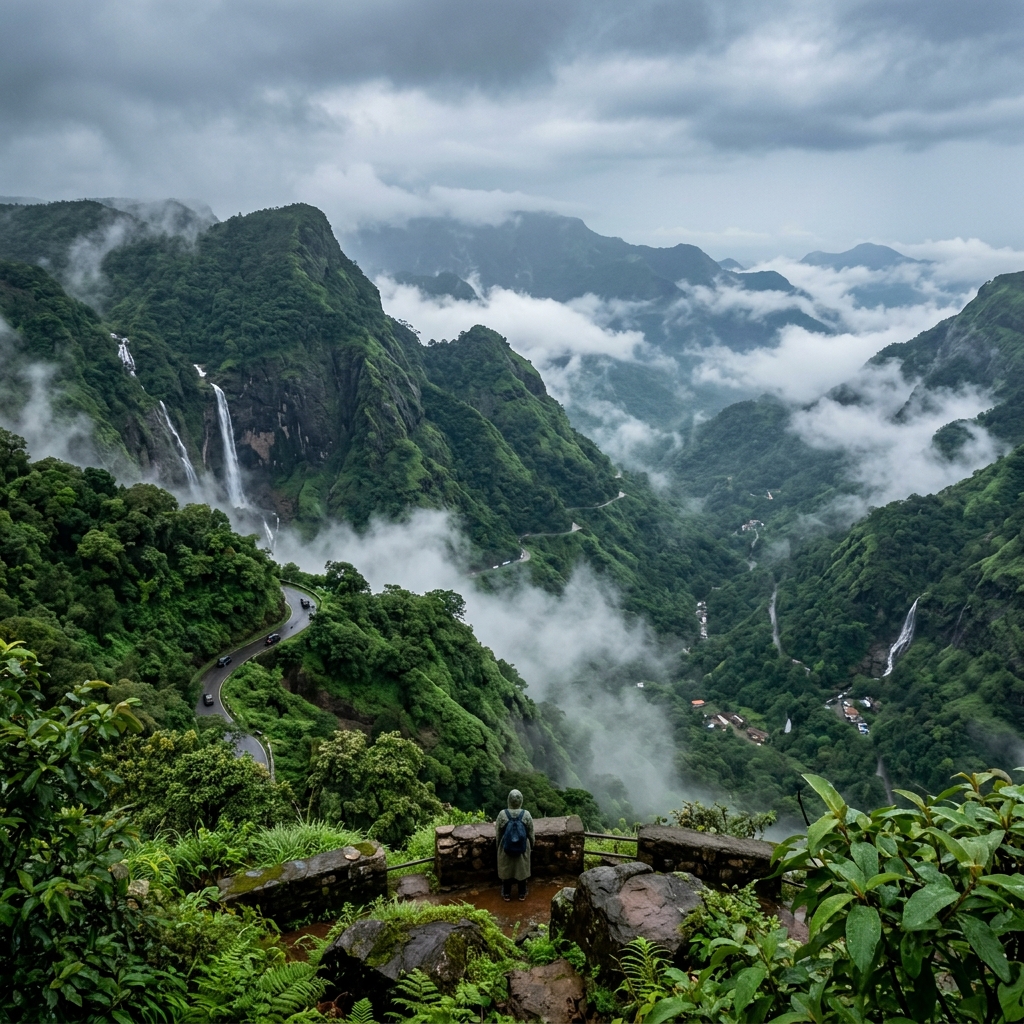
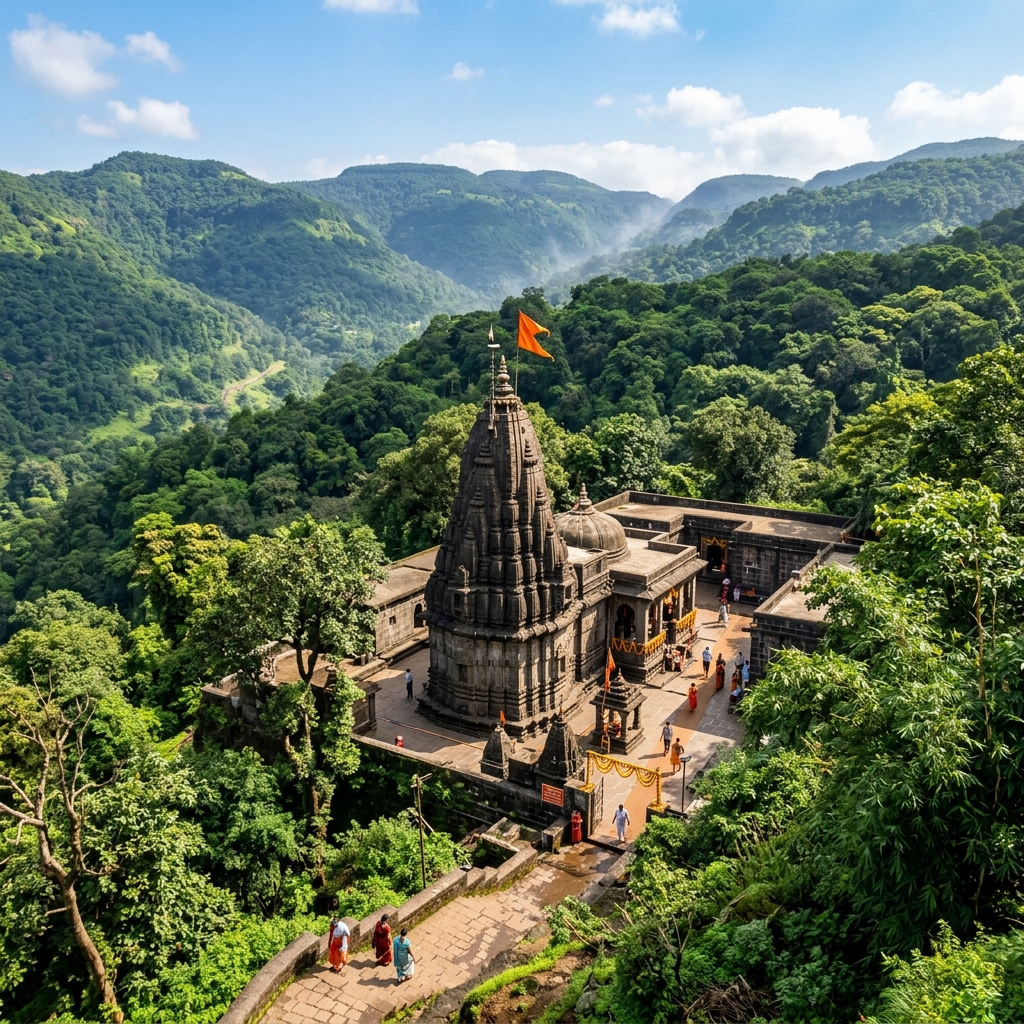
Bhimashankar is located in the village Bhorgiri in the ghat region of the Sahyadri range. Situated at a height of around 3,250 feet, Bhimashankar is surrounded by hills and is covered by thick green rainforests. Legend has it that the name Bhimashankar was originated from the river Bhima which evaporated due to the generalization between the war of Lord Shiva and the demon Tripurasura. It is considered to be one of the holiest places in India because of the jyotirlinga. Bhimashankar is also a popular destination for trekkers. Bhimashankar Wildlife Sanctuary is another important reason why people come here.
Bhimashankar Wildlife Sanctuary

Originally to safeguard the natural habitat of the endemic species, Indian Giant Squirrel, Bhimashankar Wildlife Sanctuary has now become a major tourist attraction of Pune and Maharashtra on the whole. The densely forested area is spread over an area of 120 sq km on the Western Ghats, also known as the Sahyadri Ranges. The place is mainly famous for being home to many endemic and pandemic animal and bird species including the Indian Giant Squirrel. It is so rich in flora and fauna that it is considered to be one of the biodiversity hotspots of the world. The reserve is also known for being the home of 14 sacred groves which are said to be thousands of years old and responsible for the origin of many species.
The forest sanctuary seems to have something for everyone. You can enjoy trekking through the well-marked and safe routes within the dense forests, taking in the sheer beauty of nature and experiencing it from close quarters. Anyone is allowed at any time, but with permission of the authorities and certified guides, that too in certain places after sunset, for obvious reasons.
If walking is not your forte, you can always opt for the safari car rides and have a glance at the wilderness in its true form from within the safety of the car. In case you are a spiritual person, one of the 12 Jyotirlingas (major shrines of Lord Shiva) is situated within the large stretch of the jungle. There are areas of the forest that are ideal for a day’s picnic too. In short, Bhimashankar Wildlife Sanctuary is the perfect choice for a quick and eventful weekend trip.