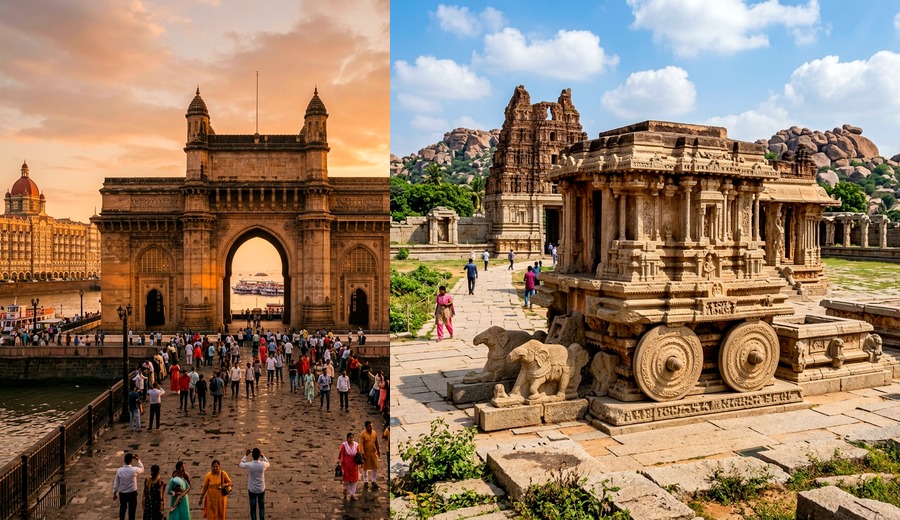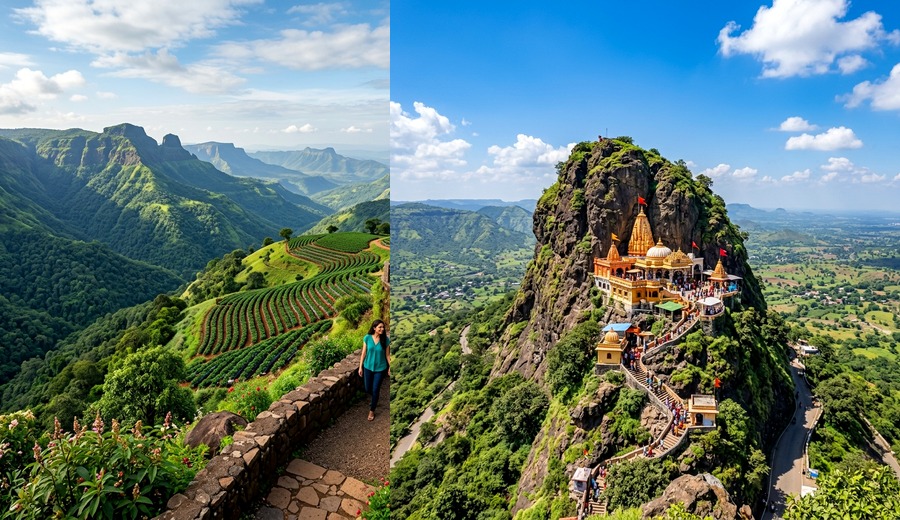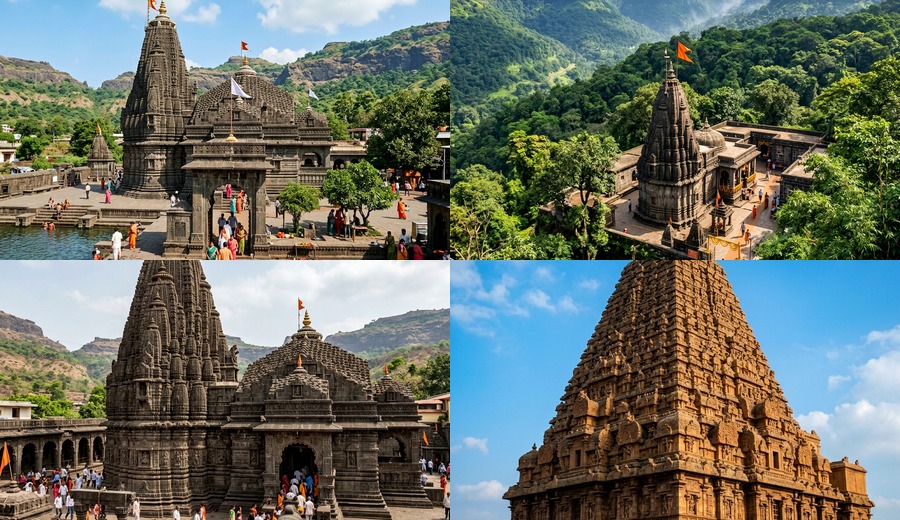

Ajanta Caves

Grineshwar  to  Ajanta caves  104 km 3 hrs 30 min

https://goo.gl/maps/efKJSgvED19AdHLZA

Ajanta Caves

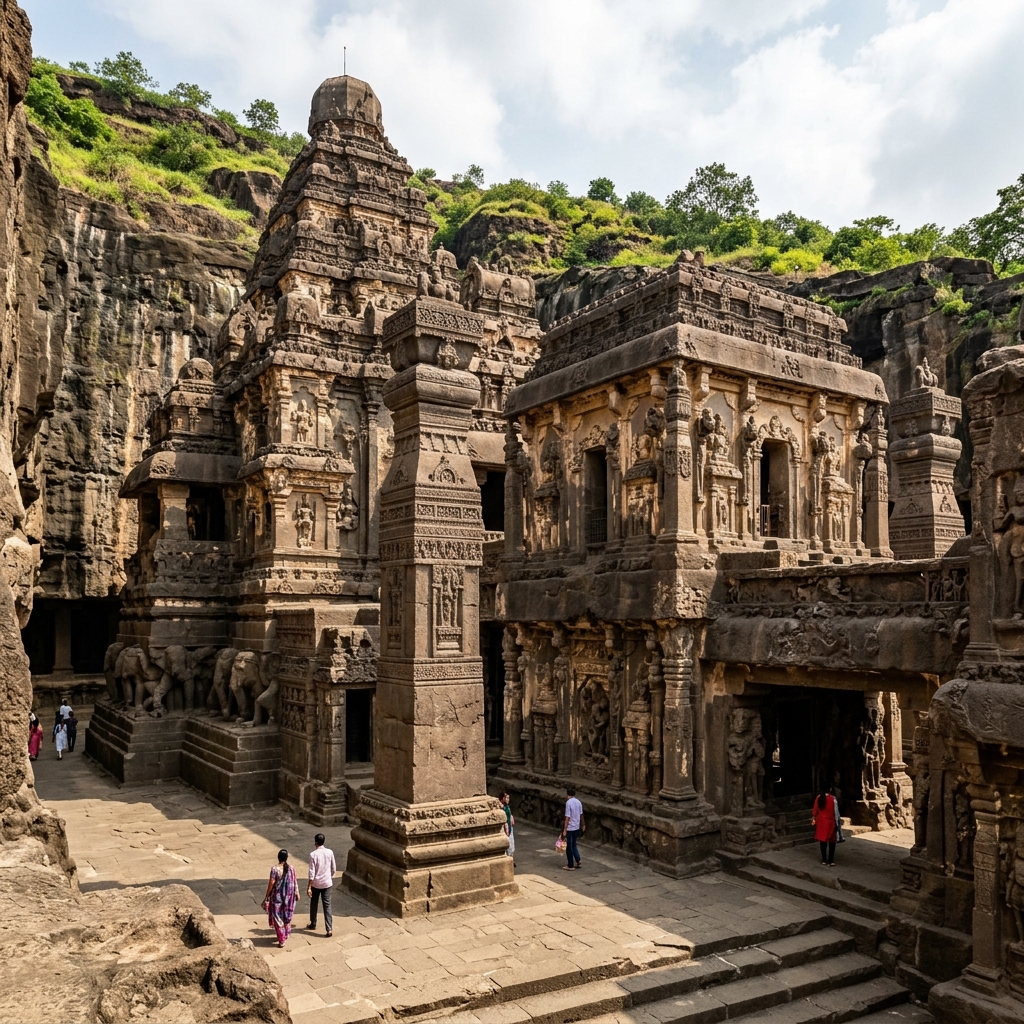
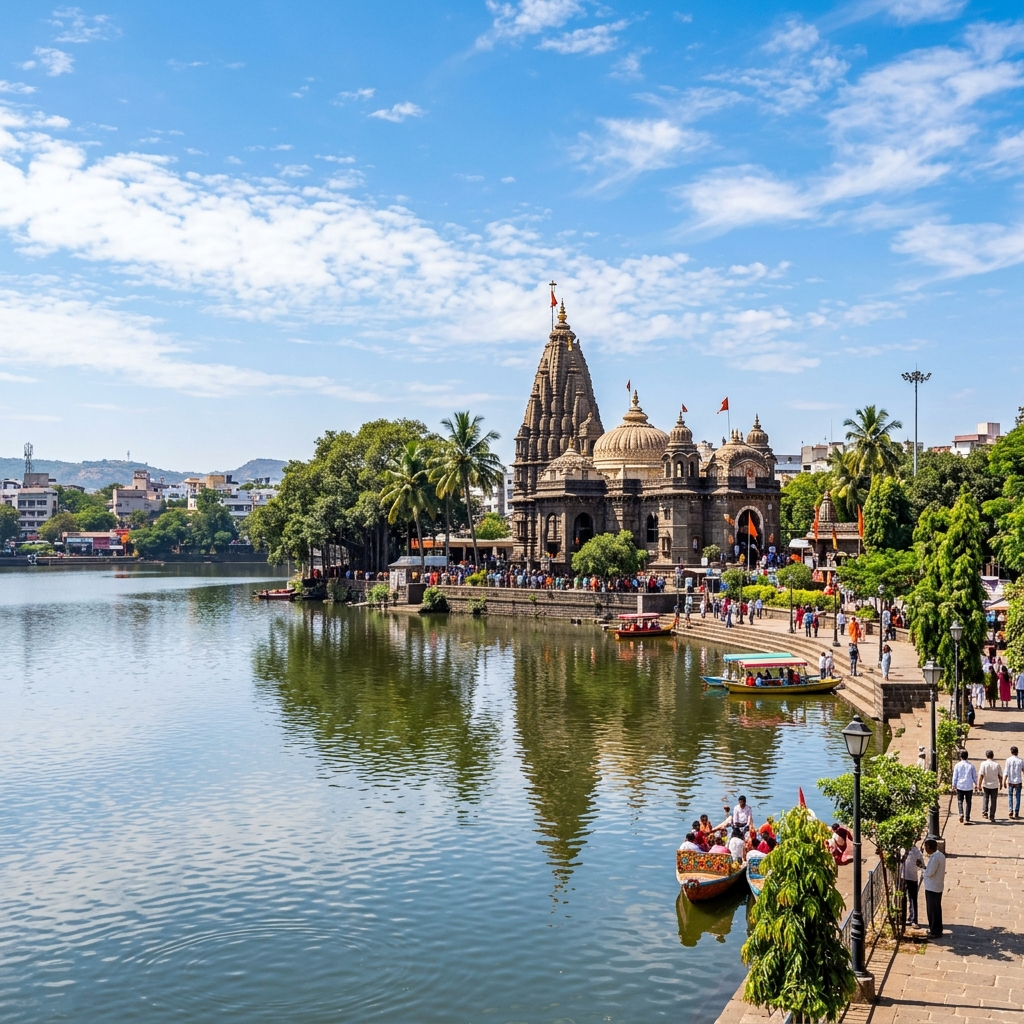
Image Result For Ajanta CavesAjanta Caves in Maharashtra, India are a Buddhist monastery complex of twenty-nine rock-cut cave monuments containing paintings and sculpture considered to be masterpieces of both “Buddhist religious art”[1] and “universal pictorial art”[2] The caves are located just outside the village of Ajinṭhā in Aurangabad District in the Indian state of Maharashtra (N. lat. 20 deg. 30′ by E. long. 75 deg. 40′). Since 1983, the Ajanta Caves have been a UNESCO World Heritage Image Result For Ajanta Heritage. Excavation of the caves began in the third-second century B.C.E., during the period when Dakshinapath was ruled by the Satavahana dynasty, and activity at the complex continued until the fifth to sixth century C.E., when the region was ruled by Vakatakas. Both the Satavahanas and Vakatakas were followers of Brahmanism but also patronized the Buddhist shrines. The walls, ceilings, and columns of the caves were covered with complex compositions of the Jataka stories (the stories of the Buddha’s former existences as Boddhisattva), and ornate floral and animal decorations. The exuberance and richness of the painting suggest that the artists were accustomed to painting secular as well as religious works. The paintings have a natural fluidity, depth, and volume not found in later, more stylized Indian art.
Description and History

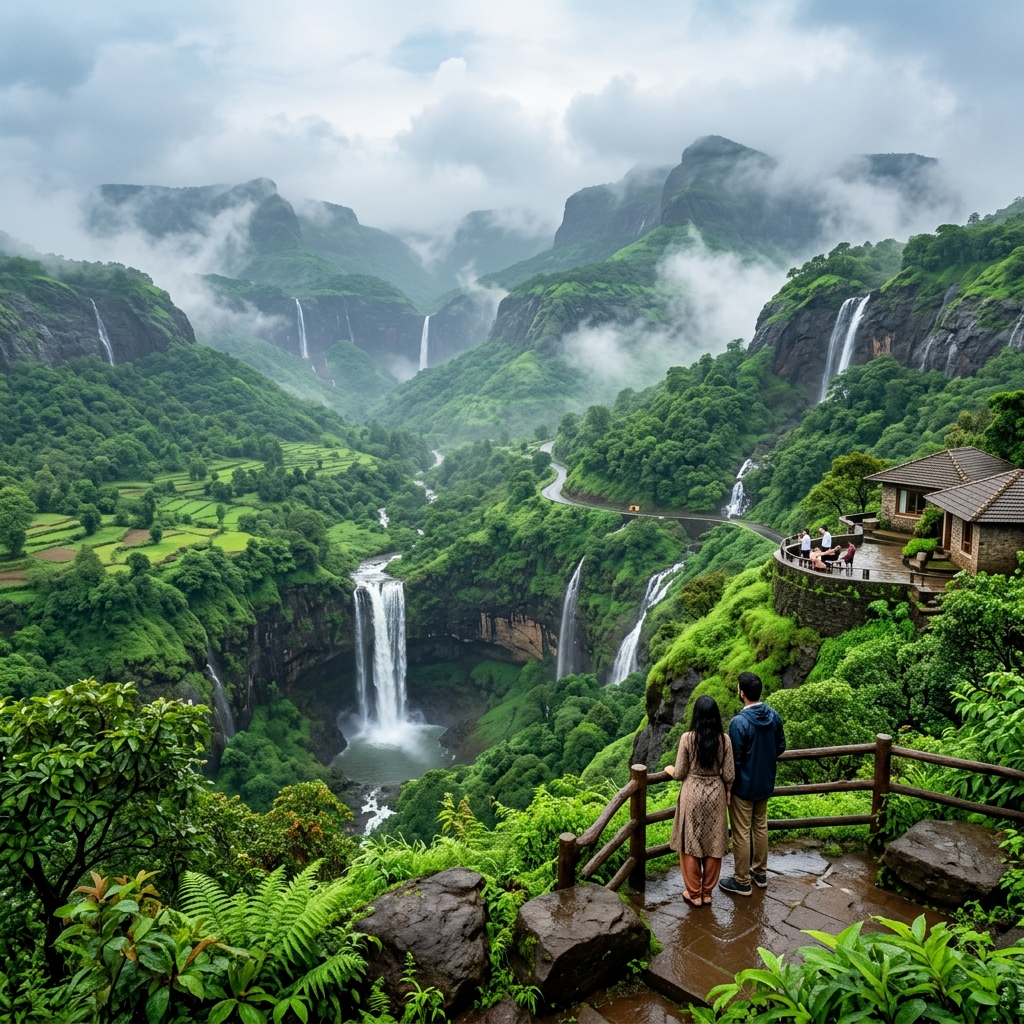
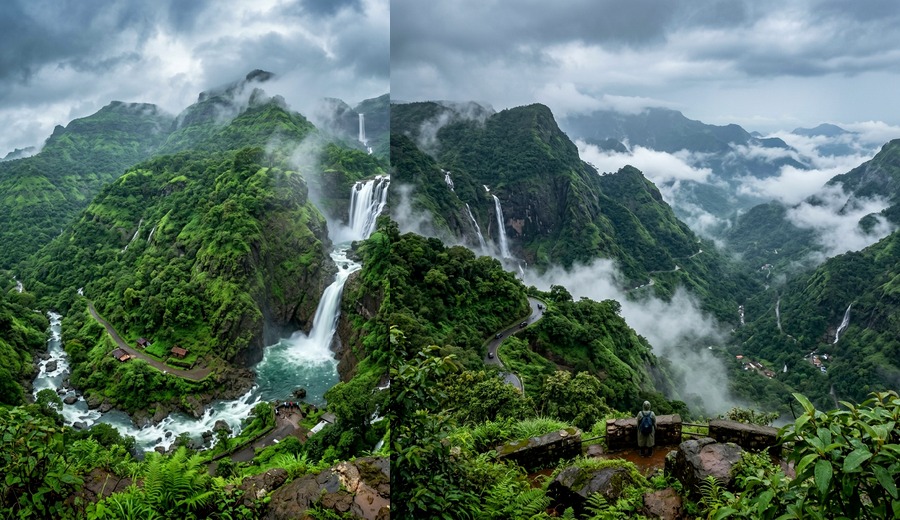
The Ajanta Caves are a Buddhist monastery complex consisting of 29 caves (as officially numbered by the Archaeological Survey of India), located in a wooded and rugged horseshoe-shaped ravine about 3.5 km from the village of Ajantha, which is situated in the Aurangābād district of Maharashtra State in India (106 kilometers away from the city of Aurangabad). Along the bottom of the ravine runs the Waghur River, a mountain stream. The caves, carved into the south side of the precipitous scarp made by the cutting of the ravine, vary from 35 to 110 feet in elevation above the bed of the stream.

The monastic complex of Ajanta consists of several viharas (monastic halls of residence) and chaitya-grihas (stupa monument halls), adorned with architectural details, sculptures, and paintings that, even in their partially damaged state, are considered one of the glories of world art.[3] Excavation of the caves began in the third-second century B.C.E., during the period when Dakshinapath was ruled by the Satavahana dynasty, and activity at the complex continued until the fifth to the sixth century C.E., when the region was ruled by Vakatakas. Both the Satavahanas and Vakatakas were followers of Brahmanism; nevertheless, they not only generated a liberal climate in which all religions could flourish but also patronized the Buddhist shrines.

The mention of a rock-cut monastery as the abode of the Buddhist monk Achala celebrated Buddhist philosopher and author of well-known books on logic, and the mountain range where it was located, the monastery being for certain Cave No. 26 and the mountain range, Ajanta ridge, appeared in the travel account of the Chinese pilgrim Hiuen Tsang, who visited India in the seventh century C.E. and stayed there for 15 years[4].

Nothing more was known of Ajanta before 1819 when some British officers of the Madras Army made a chance discovery of this magnificent site. They named it Ajanta after the name of the nearest village.

In 1843, after a gap of 25 years, James Fergusson presented a paper to the Royal Asiatic Society of Great Britain and Ireland and drew global attention to the site. The Madras Army deputed its officer R. Gill to prepare copies of the Ajanta murals. Gill worked from 1849 to 1855 and prepared 30 paintings, but unfortunately, they were destroyed in a fire in 1866. The efforts to discover Ajanta progressed in two directions, the preparation of copies of the murals, and research on Ajanta’s other aspects. Mr. Griffiths, the Superintendent, and Principal of Sir Jamshedji Jijibhai School of Art, Bombay, was at Ajanta from 1872 to 1885 with a team of his students, to copy its murals, but unfortunately, most of these were also destroyed in a fire. Finally, Lady Haringham and a team of artists comprising Syed Ahmad and Mohammad Fazlud-din of Hyderabad and Nandalal Bose, Asit Kumar Haldar and Samarendranath Gupta of the Calcutta School, camped at Ajanta from 1910 to 1912 copying its murals. In 1956-1957 the Archeological Survey of India took up the project and authentic copies of the murals were prepared.

In 1983, the Ajanta Caves have declared a UNESCO World Heritage Site.

Dating of the Caves

The period during which Ajanta Caves have excavated stretches over eight- or nine hundred years from the third- to second century B.C.E. to the fifth-sixth century C.E. The caves reveal two distinct phases of excavation. Six of them, namely, caves 9, 10, 8, 12, 13, and 15-A (the last one was re-discovered in 1956, and is still not officially numbered), belong to the early period. Caves 9 and 10 appear to have been excavated during the second half of the third or the first half of the second century B.C.E. The other four date from the first-century B.C.E. However, Cave 10 is the earliest; it precedes even Cave 9 by at least 50 years. Caves 12, 13, and 15A of this phase are vihāras (monastic halls of residence).

During this period, Buddhism pursued the Hīnayāna doctrine, which initially prohibited the worship of anthropomorphic images of Buddha. Caves 9 and 10, the Chaitya-grahas (homes of the Sacred, monument halls) do not have anthropomorphic images of Buddha, though on the façade of Cave No. 9 such images were subsequently added. Around the first century, B.C.E. Hinayana allowed the making of Buddha’s personal images. The shift from non-image to image characterizes other caves of this early phase, known as the Hinayana-Satavahana phase.

Caves 1, 2, 4, 7, 11, 14, 15, 16, 17, 18, 19, 20 to 24, 25, 26, 27, 28, and 29 belong to the later phase, which began three centuries later, from the fifth to the sixth century C.E. Buddhism had largely shifted to Mahayana doctrine and the region was ruled by Vakatakas of the Vatsagulma branch, who were also the patrons of these caves; this phase is usually known as Mahayana-Vakataka phase. As suggested by epigraphic records, Caves No. 16 and 17 were commissioned by Vakataka ruler Harishena (475-500 C.E.) through one of his ministers Varahadeva, who was posted at the site for supervising the progress, and a subordinate vassal of the area respectively. Ajanta had been a center of monastic and religious activities since the second-to first century B.C.E.; the embellishment of facades and wall spaces with paintings and sculptures continued all through. However, the excavation of the caves seems to have been suspended until the excavation of Caves 16 and 17. Cave 8 was long thought to be a Hinayāna cave; however current research shows that it is in fact a Mahayana cave. Three chaitya-grihas, caves 19, 26, and 29, were excavated during the Vakataka or Mahayana phase. The last cave was abandoned soon after it was begun. The rest of the excavations are viharas: caves 1-3, 5-8, 11, 14-18, 20-25, and 27-28.

None of the caves in the Vakataka phase were ever fully completed. Based on the archaeological evidence visible on-site, the suggestion of Walter M. Spink that a crisis occurred when the ruling Vakataka dynasty suddenly fell out of power and forced all activities to a sudden halt, is increasingly gaining acceptance


Download Our App